Automation
Replacing manual accounting steps with automated ones.


Maximizing Efficiency with Automated Bank Transfers in Accounting
Finance teams are continually challenged to expedite closure, minimize risk, and provide more timely cash visibility—without increasing headcount. Yet, many organizations still depend on manual payment initiation, spreadsheet trackers, and ad hoc approvals, leading to avoidable exceptions in reconciliation and month-end close. The outcome is predictable: inconsistent documentation, higher error rates, and a hard-to-audit 'shadow process' of email-based approvals.

Leveraging Efficiency: Harnessing the Power of Connex for QuickBooks in Financial Management
Today's finance teams are expected to close faster, forecast more accurately, and deliver audit-ready reporting—often without proportional headcount growth. The constraint is rarely effort; it’s usually friction across systems, inconsistent transaction coding, and manual reconciliations that create delays and rework. The most effective finance leaders address this by standardizing how operational data becomes accounting data, and by putting controls around that flow.


Navigating QuickBooks Compatible Software: Essential Tools for Financial Experts
Finance professionals are constantly tasked with closing faster, forecasting with greater accuracy, and maintaining robust controls—often without increasing staff. This challenge is precisely why many financial leaders delve into QuickBooks compatible software: the right add-ons can automate high-volume workflows, minimize manual reconciliations, and generate cleaner audit trails while preserving the general ledger as the source of truth.

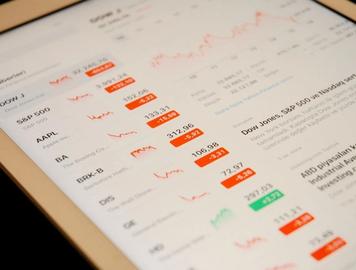
Exploring the Future: How AI Software for Accounting Is Changing the Finance Industry
Finance leaders are witnessing a fundamental shift: accounting is transitioning from periodic, manual workflows to continuous, data-driven operations. The catalyst is AI software for accounting, which merges machine learning, natural language processing, and workflow automation to reduce effort in routine processing while enhancing the speed and quality of decision support. For CFOs, controllers, and accounting leaders, the real question is not whether AI will be used, but where it should be deployed first—and how to govern it.

Navigating the Intersection of Fintech and Accounting: A Guide for Modern Finance
Finance leaders are at the forefront of a fundamental shift where software-enabled financial services and modern accounting operations are becoming increasingly intertwined. The convergence of fintech and accounting extends beyond faster payments or digital ledgers—it's about reengineering how data is captured, validated, reconciled, and transformed into management insight. As transaction volumes increase and stakeholder expectations rise, the finance function is being tasked to deliver both speed and assurance.

Grasping the Influence of FinTech Accounting on Conventional Financial Services
Traditional financial services are being reshaped by faster payments, embedded finance, real-time customer expectations, and increasingly automated back offices. At the heart of this change is FinTech Accounting: not a new set of standards, but a new operating reality where transaction volume is higher, settlement is faster, data is richer, and assurance must be continuous rather than periodic.
Your Next Close Is Already Counting Down
Every hour your team spends on manual reconciliations is an hour they're not doing higher-value work. Equility handles the matching, the checks, and the errors — so your close takes hours, not days.