Accounting Automation
Taking manual steps out of the ledger: automation, AI, and the controls that have to survive the change.

Financial Process Automation Software: How It Changes the CFO Role
Finance leaders are increasingly expected to deliver quicker closes, stricter controls, and more insightful forward-looking predictions, often without additional resources. In such a scenario, financial process automation software has become a necessity rather than a luxury, acting as the operating system for modern finance. Many CFOs are harnessing automation not only to reduce manual labor but also to reshape how finance partners with the business.
Top 10 Cloud Based Accounting Systems for Finance Professionals
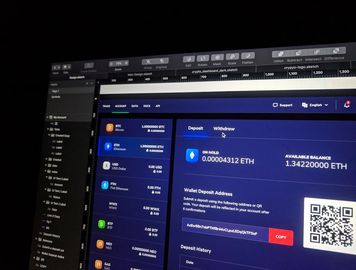
Finance leaders are increasingly standardizing on cloud based accounting systems to support faster closes, tighter controls, and real-time visibility across entities, business units, and geographies. The shift is not just a technology refresh; it’s a redesign of how data enters the ledger, how approvals are enforced, and how management reporting is delivered. When the core general ledger, payables, receivables, and consolidation processes run in a modern cloud environment, finance can reduce manual work, improve audit readiness, and respond to business changes with less friction.

Mastering How to Automate Bookkeeping: A Comprehensive Guide for Finance Professionals
Finance teams are under pressure to close faster, improve forecast accuracy, and strengthen controls—all while transaction volumes grow. In such an environment, the goal isn’t to “do less accounting,” but to standardize how data is captured, coded, reviewed, and reconciled so the team can spend more time analyzing results. When implemented correctly, automation reduces error rates, increases audit trails, and makes performance more measurable.

Unveiling the Optimal Accounting Software for SaaS Businesses: An In-Depth Guide
Finance teams in the SaaS sector operate at the crossroads of recurring revenue, rapid growth, and escalating compliance expectations. The difference between 'adequate' accounting and a SaaS-optimized finance stack emerges swiftly: month-end close timelines extend, revenue schedules become fragile, and board reporting transforms into a complex task of data analysis.

Maximizing Efficiency with Automated Bank Transfers in Accounting
Finance teams are continually challenged to expedite closure, minimize risk, and provide more timely cash visibility—without increasing headcount. Yet, many organizations still depend on manual payment initiation, spreadsheet trackers, and ad hoc approvals, leading to avoidable exceptions in reconciliation and month-end close. The outcome is predictable: inconsistent documentation, higher error rates, and a hard-to-audit 'shadow process' of email-based approvals.

Exploring the Future: How AI Software for Accounting Is Changing the Finance Industry
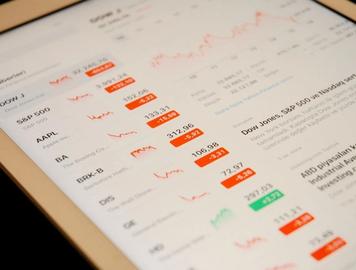
Finance leaders are witnessing a fundamental shift: accounting is transitioning from periodic, manual workflows to continuous, data-driven operations. The catalyst is AI software for accounting, which merges machine learning, natural language processing, and workflow automation to reduce effort in routine processing while enhancing the speed and quality of decision support. For CFOs, controllers, and accounting leaders, the real question is not whether AI will be used, but where it should be deployed first—and how to govern it.

Navigating the Intersection of Fintech and Accounting: A Guide for Modern Finance
Finance leaders are at the forefront of a fundamental shift where software-enabled financial services and modern accounting operations are becoming increasingly intertwined. The convergence of fintech and accounting extends beyond faster payments or digital ledgers—it's about reengineering how data is captured, validated, reconciled, and transformed into management insight. As transaction volumes increase and stakeholder expectations rise, the finance function is being tasked to deliver both speed and assurance.

Grasping the Influence of FinTech Accounting on Conventional Financial Services
Traditional financial services are being reshaped by faster payments, embedded finance, real-time customer expectations, and increasingly automated back offices. At the heart of this change is FinTech Accounting: not a new set of standards, but a new operating reality where transaction volume is higher, settlement is faster, data is richer, and assurance must be continuous rather than periodic.
Your Next Close Is Already Counting Down
Every hour your team spends on manual reconciliations is an hour they're not doing higher-value work. Equility handles the matching, the checks, and the errors — so your close takes hours, not days.