Accounting Software
Choosing and running accounting software.

The Role of Data Reconciliation Software in Modern Accounting
Today's finance teams reconcile more than just bank statements and subledgers. They reconcile data across ERPs, billing platforms, procurement tools, payroll, and data warehouses—often with different timing, identifiers, and aggregation rules. In such an environment, data reconciliation software has become an essential tool for CFOs who require speed, accuracy, and audit-ready evidence without increasing staff.
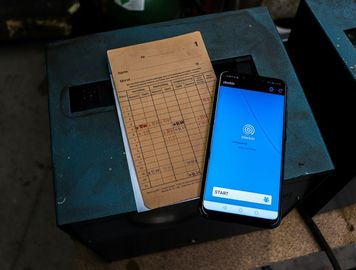
Evaluating Bank Account Reconciliation Software Free of Charge: A CFO's Guide
Why Reconciliation Matters
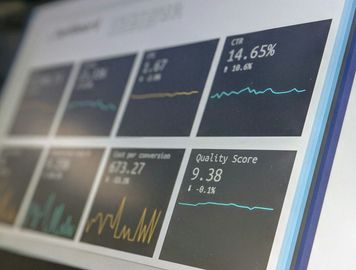
Maximizing the Advantages of Bank Statement Reconciliation Software for Finance Professionals
Finance leaders rarely grapple with explaining why reconciliation matters; their challenge lies in making it swift, consistent, and verifiable. Bank activity is high-volume, time-sensitive, and often complex—partial settlements, bundled fees, timing differences, and unclear remittance details. When the bank statement becomes the bottleneck, close timelines slip, cash visibility diminishes, and the team spends more time investigating than analyzing.

Navigating Free Reconciliation Software Options for Finance Professionals
Finance leaders are often tasked with a dual mandate: accelerate the close while strengthening controls. This challenge has sparked a surge in interest in free reconciliation software. Teams are seeking automation-level efficiency without an immediate budget increase. However, the term “free” can encompass many things: limited users, capped transaction volumes, reduced integrations, or minimal audit trails. Making the right choice requires a risk-first lens and a clear understanding of your reconciliation objectives.
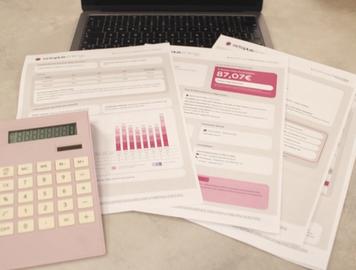
Exploring Accounting Software Compatible with QuickBooks: A Comprehensive Guide for Finance Professionals
Finance teams often reach a point where their core accounting platform must work alongside specialized systems for spend management, payroll, inventory, revenue operations, or analytics. In those moments, the question is not whether you can add tools—it’s whether you can add them without breaking controls, data integrity, or close timelines. This guide explores accounting software compatible with quickbooks from a CFO and controller perspective: what “compatible” truly means, how to evaluate fit, and how to implement with confidence.

Discovering the Best SMB Accounting Software for Financial Leaders
Modern finance teams face the challenge of closing faster, forecasting more accurately, and maintaining robust controls, often with lean staffing. In this context, selecting the best SMB accounting software is less about 'features' and more about constructing a reliable financial operating system that scales with the business. The ideal platform should expedite the monthly close, enhance audit readiness, and minimize manual work without compromising governance.
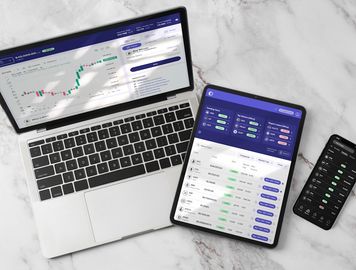
Uncovering the Best Bank Reconciliation Software for Finance Teams
Finance leaders rarely find it difficult to define what bank reconciliation is; the more challenging part is executing it consistently, quickly, and with controls that withstand audit scrutiny. The best bank reconciliation software should diminish manual effort while enhancing evidence quality, exception management, and close predictability—without creating a “black box” that your team cannot decipher.

Optimizing Financial Operations with Check Reconciliation Software: A Comprehensive Guide for Professionals
Finance departments continue to depend on checks for vendor payments, refunds, escrow activities, and certain disbursement workflows. However, the operational reality is often a fragmented process of bank portals, spreadsheets, and manual verification routines that make it difficult to determine what has truly cleared, what is stale, and what could be fraudulent. Check reconciliation software brings order to this by automating the matching of issued checks to bank activity, highlighting exceptions, and maintaining an audit trail that withstands scrutiny.
Your Next Close Is Already Counting Down
Every hour your team spends on manual reconciliations is an hour they're not doing higher-value work. Equility handles the matching, the checks, and the errors — so your close takes hours, not days.