Account Reconciliation
Reconciling the rest of the balance sheet: cash, credit cards, clearing accounts, intercompany, and high-risk accruals.

Reconciliation money in practice: reconcile cash, payments, and bank balances with audit-ready controls
Finance leaders rarely worry about a single transaction—they worry about drift. Drift happens when bank balances, payment processor activity, and the general ledger appear “close enough” until month-end exposes missing deposits, duplicated payouts, stale bank fees, or misapplied customer payments. The result is not just extra journal entries; it’s lost time, delayed reporting, and avoidable audit questions. Done well, reconciliation is a control that proves cash is real, complete, and correctly classified.
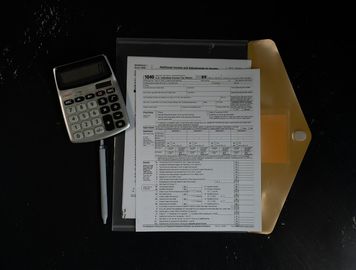
Enhancing Accounting Efficiency: Methods and Resources for the Contemporary Finance Professional
Accounting Efficiency Today
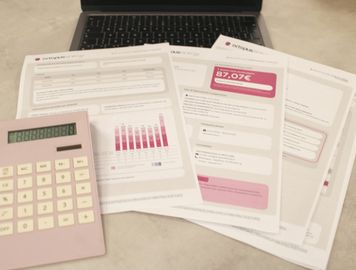
Streamlining Accounting Processes with the Duco Reconciliation Tool
Finance organizations often face challenges not because they lack data, but because the data they have is fragmented, duplicated, and difficult to verify as complete and accurate under time pressure. As transaction volumes increase, manual reconciliation becomes a bottleneck that heightens operational risk and delays close. The practical goal for CFOs is not just 'faster matching,' but tighter controls, fewer surprises, and a scalable process.

Maximizing Financial Management with Cloud Accounting Services
Finance leaders are under pressure to close faster, forecast more accurately, and demonstrate control effectiveness—all while scaling operations and adapting to evolving business models. Cloud accounting services have transitioned from a 'nice to have' to a practical foundation for modern finance, enabling real-time reporting, improved collaboration, and automation that diminishes manual risk. When implemented with appropriate governance, they support both strategic agility and disciplined compliance.


A Comprehensive Guide to Reconciling Accounts in QuickBooks Online
Finance leaders depend on timely, accurate reconciliations to trust their figures—particularly during month-end closure, lender reporting, and board reviews. Yet, many organizations still treat reconciliation as a checkbox activity instead of a structured control that prevents misstatements. This guide to reconciling accounts in QuickBooks Online is designed for CFOs and finance teams who aim for a repeatable, auditable process that scales.

The Role of Data Reconciliation Software in Modern Accounting
Today's finance teams reconcile more than just bank statements and subledgers. They reconcile data across ERPs, billing platforms, procurement tools, payroll, and data warehouses—often with different timing, identifiers, and aggregation rules. In such an environment, data reconciliation software has become an essential tool for CFOs who require speed, accuracy, and audit-ready evidence without increasing staff.

Exploring the Benefits and Capabilities of a Financial SaaS Application for Finance Professionals
Finance organizations are being asked to do more with fewer resources: shorten the close, strengthen controls, produce real-time insights, and support strategic decisions—often across multiple entities and systems. A contemporary financial SaaS application assists in meeting these demands by standardizing processes, automating repeatable work, and making data more accessible without increasing operational complexity.

Mastering Ecommerce Payment Reconciliation: A Comprehensive Guide for Finance Professionals
Ecommerce finance teams live at the intersection of high-volume orders, complex payment rails, and fast-moving operational decisions. Yet many organizations still treat reconciliation as a spreadsheet exercise—fine for low volume, but fragile when chargebacks rise, partial refunds become common, and multiple payout schedules stack on top of each other. The result is predictable: long close cycles, unexplained variances, and margin erosion that only shows up after the period ends.
Your Next Close Is Already Counting Down
Every hour your team spends on manual reconciliations is an hour they're not doing higher-value work. Equility handles the matching, the checks, and the errors — so your close takes hours, not days.