Oct 04, 2026
Enhancing Accounting Efficiency: Methods and Resources for the Contemporary Finance Professional

- Reduce close cycle time by shifting repeatable work into pre-close and defining clear deliverable cutoffs.
- Standardize journal entries and reconciliations with templates, required support, and consistent review criteria.
- Automate high-volume, rules-based tasks first—especially reconciliations and recurring postings—while managing exceptions.
- Adopt risk-based reconciliation tiers to focus effort where materiality and volatility are highest.
- Improve upstream data quality with critical data elements, coding standards, and monthly exception reporting.
- Track operational KPIs (post-close entries, rework rate, on-time reconciliations) and govern improvements with owners and thresholds.
Accounting Efficiency Today
Accounting Efficiency has emerged as a crucial capability for contemporary finance teams as transaction volumes increase, stakeholders require quicker insights, and compliance expectations become more stringent. In numerous organizations, the close process still depends on spreadsheets, manual reconciliations, and institutional knowledge—leading to bottlenecks and key-person risks. The outcome is often predictable: extended close cycles, more post-close adjustments, and diminished confidence in the figures.
The encouraging news is that efficiency gains are typically achievable without sacrificing control or auditability—if you approach improvement as a system, not a collection of quick fixes. Teams that integrate process design, automation, and governance regularly reduce close cycle time by 20–40% while enhancing accuracy. If you're considering where to begin, the frameworks provided in guides on mastering accounting workflow software for contemporary teams and AI tools for accounting and finance operations offer valuable context for constructing a roadmap.
Close Process Design
A quicker close begins with defining what “done” signifies for each close deliverable and establishing clear cutoffs for subledgers, estimates, and late adjustments. Numerous finance teams lose days not on complicated accounting, but on avoidable rework—missing support, unclear owners, or inconsistent review standards. A practical initial step is to map your close into phases (pre-close, day 0–2, day 3–5, post-close) and assign ownership, inputs, and review criteria for every task.
Consider a mid-market services company closing in 10 business days with frequent late accruals and revenue adjustments. By introducing a pre-close cadence (weekly accrual refresh, revenue completeness checks, and open item reviews), the team can shift 30–50% of work earlier in the month. The close then becomes a confirmation exercise rather than a discovery process. An actionable step would be to run a two-month pilot where you shift five recurring journal entries and two reconciliations into pre-close, then measure cycle time, number of post-close entries, and reviewer rework.
Standardized Workflows
Standardization is one of the highest-ROI moves in finance operations because it reduces decision fatigue and review time. Create templates for recurring journal entries, reconciliation formats, and variance analyses, including required fields (business purpose, calculation method, support links, preparer and reviewer sign-off). When every preparer uses a different format, reviewers spend time interpreting instead of validating.
A common case scenario involves multiple cost centers submitting accruals inconsistently—some provide support, others provide only totals. Introduce a single accrual template with mandatory supporting schedules and a short narrative explaining what changed from last month. Over a quarter, you can typically cut accrual clarification back-and-forth by 30–60% and reduce the number of “true-up” entries in later periods. An actionable step would be to define “minimum acceptable support” for the top 20 entries that drive 80% of close adjustments and enforce it with a checklist.
Automation Priorities
Automation is most effective when it targets high-volume, rules-based work with clear upstream data. Begin by ranking processes by (1) hours spent per month, (2) error rate or rework frequency, and (3) compliance risk. Reconciliations, routine postings, and repetitive tie-outs often rise to the top because they combine effort with risk.
For instance, a finance team spending 120 hours per month on bank, clearing, and intercompany reconciliations can reduce manual time considerably by automating matching rules and exception workflows. The key is to automate the “happy path” (e.g., exact matches, tolerances, timing differences) while preserving controls for exceptions. To evaluate this path, review guides on automated account reconciliation software and its efficiency impact and apply the same principles when designing internal matching rules and escalation thresholds.
Smarter Reconciliations
Reconciliations are a control activity, not just a close task—and they’re often where inefficiency lurks. Improve speed by segmenting accounts into risk tiers and matching reconciliation effort to risk. High-risk accounts (cash, revenue-related clearing, payroll liabilities) should be reconciled monthly with clear support standards, while low-risk, low-movement accounts may be reconciled quarterly if policy permits.
A practical scenario: a company reconciles 180 balance sheet accounts monthly, but 70 accounts have immaterial activity and rarely change. By adopting a risk-based approach and focusing monthly effort on the top 60–80 accounts that drive most balances and audit attention, the team can free up 25–35% of reconciliation hours. Actionable steps would be to (1) categorize accounts by materiality and volatility, (2) define matching rules and tolerances, and (3) formalize an exception queue. For implementation guidance, align your process to the methods described in guides on automate reconciliation best practices for finance professionals.
Journal Entry Controls
Routine journal entries are a frequent source of delays and control findings: missing support, unclear approvals, or late postings that trigger downstream rework. Establish a journal entry policy that includes standardized descriptions, required attachments, thresholds for review, and a clear cutoff calendar. A simple but powerful improvement is to create a “recurring entry library” that contains pre-approved logic and documentation, reducing month-end decision-making.
In practice, teams often find that 40–60% of monthly entries are recurring or semi-recurring (allocations, amortizations, accrual reversals). If you streamline these with defined logic and automated scheduling, you reduce both effort and error risk. A finance lead might run a workshop to identify the top 25 recurring entries, document each entry’s purpose and calculation source, and then implement an automated workflow with approvals and logs. For a deeper operational lens, see guides on automatic journal entry controls and accuracy principles and adapt the control concepts to your own general ledger environment.
Data Quality Discipline
Efficiency gains collapse when upstream data is inconsistent. Common issues include duplicate vendor records, inconsistent department coding, missing project identifiers, and timing gaps between operational systems and the general ledger. Finance leaders should treat master data and coding standards as part of the accounting operating model, not an IT afterthought.
A practical approach is to define “critical data elements” (CDEs) required for financial reporting—such as entity, department, product line, customer type, and contract start/end dates. Then, set validation rules at the point of entry and implement monthly exception reports that flag missing or invalid codes. Many organizations see a 10–20% reduction in reclasses and allocation disputes within two quarters when they implement tighter coding discipline. An actionable step would be to publish a one-page coding guide and track the top five data errors each month, assigning owners and deadlines for fixes.
Reporting That Scales
Fast reporting depends on repeatable datasets and consistent definitions, especially for metrics used by leadership. If your team rebuilds the same management pack every month—copying and pasting tables, reconciling multiple versions of “revenue,” and hunting for commentary—you’re paying an avoidable tax. Instead, define a single source of truth for each KPI, including calculation logic, refresh frequency, and ownership.
Consider a business leader asking for gross margin by product weekly, but finance can only deliver monthly because the data preparation is manual. By building a standardized reporting dataset (with documented transformations) and a monthly narrative template, finance can shift effort from compilation to analysis. Teams often reclaim 15–25 hours per month by eliminating duplicate report builds and replacing them with automated refreshes and standardized commentary prompts. Actionable steps would be to (1) inventory all recurring reports, (2) remove duplicates, (3) standardize metric definitions, and (4) create a version-controlled “metrics dictionary” accessible to stakeholders.
Team Operating Model
The most sustainable improvements come from clarifying roles, decision rights, and escalation paths. When ownership is fuzzy, tasks bounce between accounting, FP&A, and operations, extending cycle times and increasing friction. A clear operating model defines who prepares, who reviews, who approves, and who is consulted—especially for high-impact estimates and unusual transactions.
A common case is intercompany and revenue cutoffs: accounting needs operational confirmations, while operations waits for finance to define what’s needed. Create service-level expectations (e.g., operations provides shipment/usage confirmations by day 1, finance posts revenue by day 2), and track performance. Cross-training also matters: aim for at least two trained owners per critical close activity to reduce key-person risk and enable vacations without extending close. An actionable step would be to run a quarterly “close retro” to identify the top three recurring blockers and assign one accountable owner per blocker.
KPIs And Governance
You can’t manage what you don’t measure, and many finance teams track close days without tracking the drivers behind them. Establish a small set of operational KPIs: close cycle time, number of post-close entries, reconciliation completion rate by day, exception backlog size, and rework rates (entries returned by reviewers). These metrics highlight whether changes are actually improving throughput and quality.
Governance should translate KPIs into actions. For example, if post-close entries exceed a threshold (say, more than 10 material adjustments or more than 1% of pre-close income), require a root-cause review and process change proposal. If reconciliations are completed late, prioritize the accounts causing delays and redesign the matching logic or upstream data feed. An actionable step would be to implement a monthly control dashboard reviewed by the controller and CFO, with owners assigned to each metric that misses target.
Implementation Roadmap
Improving Accounting Efficiency is easiest when you work in 30–60–90 day waves rather than attempting a full transformation at once. In the first 30 days, focus on visibility: map processes, document pain points, collect baseline metrics, and standardize templates for entries and reconciliations. In days 31–60, automate one or two high-volume workflows, tighten review checklists, and implement exception reporting.
In days 61–90, scale what works: expand automation to additional account groups, refine risk-tiering for reconciliations, and formalize your operating model with SLAs and a close calendar. A practical sequence is to start with reconciliations (high hours, clear rules), then recurring journals (repeatable and controllable), then reporting workflows (standard definitions and refreshes). An actionable step would be to create a single-page transformation charter that lists initiatives, expected hours saved, control impact, and implementation owner—then track progress weekly.
Common Pitfalls
One frequent pitfall is automating a broken process. If reconciliations are inconsistent or journal entries lack standardized support, automating the workflow can accelerate errors rather than reduce them. Start by simplifying and standardizing, then automate the stable process, and finally optimize with analytics and exception handling.
Another pitfall is underinvesting in change management. Even the best-designed workflow fails if approvers ignore review queues or preparers bypass required support. Set expectations early, train the team with examples of “good” versus “not acceptable,” and reinforce adherence through review metrics and periodic audits. An actionable step would be, for any new workflow, to define success criteria (e.g., 95% on-time reconciliations, 50% fewer reviewer returns) and review adoption after the first two closes.
Conclusion
Accounting Efficiency is ultimately a leadership choice: designing finance operations to deliver accurate numbers quickly, consistently, and with robust controls. The highest-impact gains come from a combined approach—standardized close design, risk-based reconciliations, disciplined data governance, and targeted automation where rules are clear. When those elements work together, finance teams reduce cycle time while improving audit readiness and stakeholder trust.
For CFOs and finance leaders, the goal is not simply “faster close,” but a scalable system that frees capacity for analysis and partnership. By measuring operational KPIs, enforcing clear ownership, and implementing changes in 30–60–90 day waves, you can sustain Accounting Efficiency improvements without burning out the team. Done well, you’ll see fewer adjustments, cleaner reconciliations, and more time for the work that drives business decisions.
FAQ
What is Accounting Efficiency in practical terms?
It’s the ability to produce accurate financial outputs (close, reconciliations, reporting, compliance) with minimal manual effort, low rework, and strong control evidence. In practice, it shows up as shorter cycle times, fewer post-close entries, and consistent documentation that reviewers and auditors can rely on.
How can we improve efficiency without weakening controls?
Start by standardizing templates and review checklists, then automate rules-based work while keeping exceptions visible and approved. Strong controls are typically improved—not reduced—when you add clear approvals, audit trails, and exception workflows.
Which processes should we automate first?
Prioritize high-volume, repetitive activities with clear logic, such as reconciliations, recurring journal entries, and routine tie-outs. Rank candidates by hours spent, error rates, and compliance risk, then pilot automation in one area before scaling.
What KPIs should a CFO track to monitor finance operations performance?
Track close cycle time, reconciliation on-time completion rate, number and value of post-close entries, reviewer return rate, and exception backlog size. These metrics reveal both speed and quality, helping leaders pinpoint root causes rather than guessing.
How long does it take to see measurable results?
Many teams see early improvements within 1–2 close cycles after standardizing workflows and shifting work into pre-close. Larger gains from automation and operating model changes often appear within 60–90 days, depending on scope and adoption.
Share :

Michael Nieto
As the owner of the financial consulting firm, Lanyap Financial, Michael helped businesses and lending institutions who needed help improving their financial operations and identifying areas of financial weakness.
Michael has since leveraged this experience to found the software startup, Equility, which is focused on providing businesses with a real-time, unbiased assessment of their accounting accuracy, at a fraction of the cost of hiring an external auditor.
Connect with Michael on LinkedIn.
Related Blogs
See All Blogs
Harnessing the Future of Finance: AI Tools for Accounting
Finance leaders are no longer questioning whether automation has a place in accounting—they’re exploring how to apply it without undermining controls, compliance, or trust in the figures. AI tools for accounting are evolving beyond basic workflow automation to comprehend documents, detect anomalies, generate narrative reports, and support decision-making. For CFOs and controllers, the opportunity lies not in replacing accountants, but in redesigning processes so teams spend less time rectifying data and more time interpreting it.

Achieving Success with Automate Reconciliation: A Detailed Guide for Finance Professionals
Modern finance teams are under constant pressure to close faster, improve accuracy, and provide decision-ready reporting. Reconciliations sit at the center of that challenge: they are repetitive, time-consuming, and risk-prone when handled through spreadsheets, email approvals, and manual matching. However, with the right data discipline and workflow design, it's possible to automate reconciliation without sacrificing control.

Maximizing Efficiency with QuickBooks Automatic Journal Entries: Controls, Speed, and Accuracy
Finance leaders rarely lose sleep over the concept of a journal entry—what keeps them up is the compounding effect of small posting errors, delayed accruals, and inconsistent classifications that surface during close. The promise of QuickBooks automatic journal entries is not “automation for automation’s sake,” but a practical way to reduce manual touchpoints, improve timeliness, and create repeatable accounting outcomes that stand up to scrutiny.

Mastering Accounting Workflow Software: A Comprehensive Guide for Finance Professionals
Finance teams are under increasing pressure to do more with less—close faster, forecast better, and maintain strong controls under tighter scrutiny. Yet many organizations still run critical accounting processes through spreadsheets, email chains, and tribal knowledge. The result is predictable: missed handoffs, inconsistent documentation, rework, and a close calendar that slips when one dependency fails.
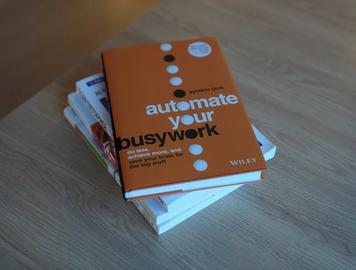
Maximizing Efficiency: An In-Depth Look at Automated Account Reconciliation Software
Finance leaders constantly face the challenge of closing accounts faster, reporting more accurately, and strengthening controls, all while managing lean teams and growing transaction volumes. Manual reconciliation processes, typically built on spreadsheets and email approvals, tend to falter as they scale: they introduce version-control issues, inconsistent documentation, and bottlenecks that delay the monthly close. The result is not only wasted time, but also increased operational risk and less confidence in the numbers.
Your Next Close Is Already Counting Down
Every hour your team spends on manual reconciliations is an hour they're not doing higher-value work. Equility handles the matching, the checks, and the errors — so your close takes hours, not days.