Michael Nieto
Author Profile

Michael Nieto
As the owner of the financial consulting firm, Lanyap Financial, Michael helped businesses and lending institutions who needed help improving their financial operations and identifying areas of financial weakness.
Michael has since leveraged this experience to found the software startup, Equility, which is focused on providing businesses with a real-time, unbiased assessment of their accounting accuracy, at a fraction of the cost of hiring an external auditor.
Connect with Michael on LinkedIn.
Articles by Michael Nieto
Financial Close Automation: How to Shorten Month-End Without Losing Control
Financial close automation handles the repeatable parts of month-end close: transaction matching, reconciliations, variance checks, exception routing, and review documentation. It does not replace accounting judgment. It removes the busywork around that judgment, so your team can spend less time proving obvious matches and more time fixing the items that actually need review.
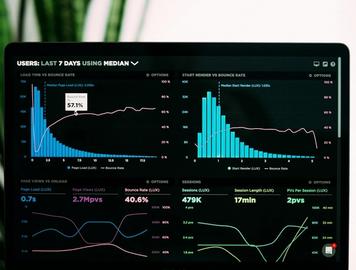
Automated KPI Reporting for Finance Teams: From Month-End Lag to Real-Time Control
Finance teams do not need another dashboard that looks good but cannot be trusted. They need KPI reporting that is timely, reconciled, and tied to the same numbers leadership uses to make decisions.



Harnessing QuickBooks Online Automation for Efficient Accounting
Modern finance teams are pressed to close faster, reduce errors, and provide more actionable reporting—often without increasing staff. The most sustainable route is not simply “working harder”; it's developing repeatable accounting operations that minimize re-keying, standardize classifications, and identify exceptions early. QuickBooks Online automation is most beneficial when approached as a process redesign, not merely a feature toggle.


Enhancing Accounting Efficiency: Methods and Resources for the Contemporary Finance Professional
Accounting Efficiency Today

Financial Process Automation Software: How It Changes the CFO Role
Finance leaders are increasingly expected to deliver quicker closes, stricter controls, and more insightful forward-looking predictions, often without additional resources. In such a scenario, financial process automation software has become a necessity rather than a luxury, acting as the operating system for modern finance. Many CFOs are harnessing automation not only to reduce manual labor but also to reshape how finance partners with the business.

Maximizing Efficiency: A Comprehensive Guide to QuickBooks Automated Sales Tax for Finance Professionals
Modern finance teams are expected to deliver faster closes, cleaner audits, and tighter cash forecasting—while tax complexity continues to increase. Sales tax is a prime example: rates change frequently, nexus rules evolve, and the cost of mistakes can be material, especially when penalties and interest accumulate over multiple periods.

Streamlining Accounting Processes with the Duco Reconciliation Tool
Finance organizations often face challenges not because they lack data, but because the data they have is fragmented, duplicated, and difficult to verify as complete and accurate under time pressure. As transaction volumes increase, manual reconciliation becomes a bottleneck that heightens operational risk and delays close. The practical goal for CFOs is not just 'faster matching,' but tighter controls, fewer surprises, and a scalable process.

The Finance Leader’s Guide to BigCommerce QuickBooks Integration
Finance leaders rarely grapple with 'getting data into accounting.' The real challenge is getting commerce data into the ledger in a way that is accurate, auditable, timely, and useful for decisions. A well-designed BigCommerce QuickBooks integration can shorten the close, reduce manual rework, and improve confidence in revenue, fees, and inventory accounting—if it’s architected with finance controls in mind.

Maximizing Financial Management with Cloud Accounting Services
Finance leaders are under pressure to close faster, forecast more accurately, and demonstrate control effectiveness—all while scaling operations and adapting to evolving business models. Cloud accounting services have transitioned from a 'nice to have' to a practical foundation for modern finance, enabling real-time reporting, improved collaboration, and automation that diminishes manual risk. When implemented with appropriate governance, they support both strategic agility and disciplined compliance.

A Comprehensive Review for Finance Professionals: Exploring FreshBooks Cloud Accounting
Introduction

A Comprehensive Guide to Reconciling Accounts in QuickBooks Online
Finance leaders depend on timely, accurate reconciliations to trust their figures—particularly during month-end closure, lender reporting, and board reviews. Yet, many organizations still treat reconciliation as a checkbox activity instead of a structured control that prevents misstatements. This guide to reconciling accounts in QuickBooks Online is designed for CFOs and finance teams who aim for a repeatable, auditable process that scales.

Maximizing Efficiency with Intuit QuickBooks Online Accountant: A Comprehensive Guide
Finance teams today are expected to deliver faster closes, tighter controls, and real-time insights, all without increasing headcount. The most sustainable approach to this challenge is to operationalize your accounting platform with repeatable workflows, clearly defined roles, and disciplined exception handling. Done correctly, this not only results in cleaner books but also provides better decision support for business leaders.

The Role of Data Reconciliation Software in Modern Accounting
Today's finance teams reconcile more than just bank statements and subledgers. They reconcile data across ERPs, billing platforms, procurement tools, payroll, and data warehouses—often with different timing, identifiers, and aggregation rules. In such an environment, data reconciliation software has become an essential tool for CFOs who require speed, accuracy, and audit-ready evidence without increasing staff.

Mastering QuickBooks Sales Tax Automation: A Finance Professional's Guide
Finance leaders are tasked with closing faster, reducing compliance risk, and enhancing audit readiness—without increasing staff size. Sales tax is central to this challenge as it affects order-to-cash, billing, revenue recognition, and cash management. In this context, QuickBooks sales tax automation transforms from a mere “accounting feature” to an operational control point that can significantly reduce risk—or create blind spots if configured poorly.

Evaluating Bank Account Reconciliation Software Free of Charge: A CFO's Guide
Why Reconciliation Matters

Mastering ACH Debit Services: A Comprehensive Guide for Finance Professionals
The gap between 'paid' and 'cash collected' in finance is where working capital resides. For many organizations, particularly those with recurring billing, B2B invoicing, or membership-style revenue, the quickest route to predictable collections is direct debit via the ACH network. Comprehending how these transactions are processed, where they can fail, and how to control them has become a core finance competency.

Maximizing the Advantages of Bank Statement Reconciliation Software for Finance Professionals
Finance leaders rarely grapple with explaining why reconciliation matters; their challenge lies in making it swift, consistent, and verifiable. Bank activity is high-volume, time-sensitive, and often complex—partial settlements, bundled fees, timing differences, and unclear remittance details. When the bank statement becomes the bottleneck, close timelines slip, cash visibility diminishes, and the team spends more time investigating than analyzing.

Exploring the Benefits and Capabilities of a Financial SaaS Application for Finance Professionals
Finance organizations are being asked to do more with fewer resources: shorten the close, strengthen controls, produce real-time insights, and support strategic decisions—often across multiple entities and systems. A contemporary financial SaaS application assists in meeting these demands by standardizing processes, automating repeatable work, and making data more accessible without increasing operational complexity.

Exploring the Benefits and Cost Efficiency of Outsourced Accounting for Businesses
Finance leaders are under constant pressure to close faster, report with higher confidence, and provide decision-ready insights—often with lean teams and rising complexity. In that environment, outsourced accounting is frequently evaluated as a way to add scalable capacity and process discipline without overbuilding internal headcount.

Maximizing SMB Finance Operations in QuickBooks: A CFO Guide
Finance leaders in growing organizations face a recurring tension: the business needs faster decisions, but finance can’t trade speed for accuracy, controls, or audit-ready records. That tension is most visible in the monthly close, cash forecasting, and spend governance—areas where small process gaps create outsized risk. The good news is that many of these issues are process-and-design problems, not headcount problems.

Mastering Ecommerce Payment Reconciliation: A Comprehensive Guide for Finance Professionals
Ecommerce finance teams live at the intersection of high-volume orders, complex payment rails, and fast-moving operational decisions. Yet many organizations still treat reconciliation as a spreadsheet exercise—fine for low volume, but fragile when chargebacks rise, partial refunds become common, and multiple payout schedules stack on top of each other. The result is predictable: long close cycles, unexplained variances, and margin erosion that only shows up after the period ends.

Navigating Free Reconciliation Software Options for Finance Professionals
Finance leaders are often tasked with a dual mandate: accelerate the close while strengthening controls. This challenge has sparked a surge in interest in free reconciliation software. Teams are seeking automation-level efficiency without an immediate budget increase. However, the term “free” can encompass many things: limited users, capped transaction volumes, reduced integrations, or minimal audit trails. Making the right choice requires a risk-first lens and a clear understanding of your reconciliation objectives.

Mastering Plaid Accounting: A Comprehensive Guide for Finance Professionals
Modern finance teams are under pressure to close faster, forecast more accurately, and prove control over cash movements across an expanding set of accounts. Concurrently, the volume of transactions and the number of payment rails continue to grow, which raises the operational cost of staying current and the risk of missing anomalies. Plaid Accounting has emerged as a common shorthand for the accounting use case of bank-data connectivity and transaction ingestion—turning raw banking activity into usable inputs for reconciliation, reporting, and controls.

Unlocking Finance Excellence: The QuickBooks Online Accountant ProAdvisor Guide
Finance leaders are increasingly tasked with delivering faster closes, tighter controls, and more decision-ready reporting—often with lean teams and growing transaction volumes. Becoming a QuickBooks Online Accountant ProAdvisor presents a practical way to standardize workflows, sharpen platform fluency, and create repeatable processes that scale across clients, business units, or portfolio companies.

Top 10 Cloud Based Accounting Systems for Finance Professionals
Finance leaders are increasingly standardizing on cloud based accounting systems to support faster closes, tighter controls, and real-time visibility across entities, business units, and geographies. The shift is not just a technology refresh; it’s a redesign of how data enters the ledger, how approvals are enforced, and how management reporting is delivered. When the core general ledger, payables, receivables, and consolidation processes run in a modern cloud environment, finance can reduce manual work, improve audit readiness, and respond to business changes with less friction.


Leveraging the QuickBooks Demo Account for Optimal Financial Management
A QuickBooks demo account is often perceived as a lightweight “try it and see” environment. For CFOs and finance leaders, this perspective leaves untapped potential. A demo company can serve as a controlled sandbox to design workflows, validate internal controls, train staff, and pressure-test reporting—without jeopardizing production data or disrupting close cycles.

A Comprehensive Guide to Reconciling a Bank Account in QuickBooks Efficiently
Reconciliation is a high-leverage close activity that validates cash, confirms cutoffs, and identifies errors before they become reporting issues. For CFOs and controllers, the goal is to achieve speed without compromising control, which means standardized inputs, repeatable steps, and clear exception handling. This guide focuses on how to reconcile a bank account in QuickBooks efficiently, providing practical strategies that reduce cycle time while enhancing auditability.

Exploring Accounting Software Compatible with QuickBooks: A Comprehensive Guide for Finance Professionals
Finance teams often reach a point where their core accounting platform must work alongside specialized systems for spend management, payroll, inventory, revenue operations, or analytics. In those moments, the question is not whether you can add tools—it’s whether you can add them without breaking controls, data integrity, or close timelines. This guide explores accounting software compatible with quickbooks from a CFO and controller perspective: what “compatible” truly means, how to evaluate fit, and how to implement with confidence.

Discovering the Best Reconciliation Tools for Finance Professionals
Finance leaders are being tasked with closing faster, forecasting more accurately, and strengthening controls—all while transaction volumes increase and systems multiply. In this context, reconciliation is not a mundane back-office task; it’s a vital assurance process that safeguards cash, revenue integrity, and reporting credibility. Selecting the best reconciliation tools can significantly alleviate month-end pressure while enhancing audit readiness and confidence in the figures.

Discovering the Best SMB Accounting Software for Financial Leaders
Modern finance teams face the challenge of closing faster, forecasting more accurately, and maintaining robust controls, often with lean staffing. In this context, selecting the best SMB accounting software is less about 'features' and more about constructing a reliable financial operating system that scales with the business. The ideal platform should expedite the monthly close, enhance audit readiness, and minimize manual work without compromising governance.

Leveraging QuickBooks Online AI for Streamlined Accounting Processes
In a finance organization, the value of automation is measured in cycle time, control quality, and decision velocity—not novelty. Accounting teams are under persistent pressure to close faster, reduce error rates, and deliver more forward-looking analysis without adding headcount. That combination has pushed AI-enabled accounting features from “nice to have” into a practical lever for CFOs who want scalable processes.

Mastering ARCS Transaction Matching: An Essential Guide for Finance Professionals
Finance teams rarely struggle due to a lack of data; they struggle because the data does not align. When bank activity, subledgers, payment processors, and the general ledger all tell slightly different stories, the close becomes a cycle of detective work, emails, and “quick fixes” that don’t scale. ARCS Transaction Matching addresses this core issue by creating a repeatable way to pair transactions across systems, flag exceptions early, and produce a defensible audit trail.
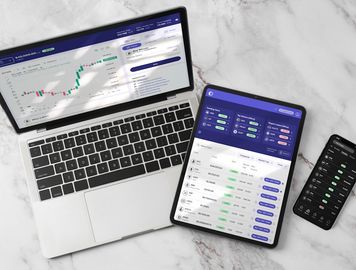
Uncovering the Best Bank Reconciliation Software for Finance Teams
Finance leaders rarely find it difficult to define what bank reconciliation is; the more challenging part is executing it consistently, quickly, and with controls that withstand audit scrutiny. The best bank reconciliation software should diminish manual effort while enhancing evidence quality, exception management, and close predictability—without creating a “black box” that your team cannot decipher.


Optimizing Financial Operations with Check Reconciliation Software: A Comprehensive Guide for Professionals
Finance departments continue to depend on checks for vendor payments, refunds, escrow activities, and certain disbursement workflows. However, the operational reality is often a fragmented process of bank portals, spreadsheets, and manual verification routines that make it difficult to determine what has truly cleared, what is stale, and what could be fraudulent. Check reconciliation software brings order to this by automating the matching of issued checks to bank activity, highlighting exceptions, and maintaining an audit trail that withstands scrutiny.

Leveraging Checkbook Reconciliation Software for Enhanced Financial Control
Cash remains a highly scrutinized account on the balance sheet due to its liquidity and exposure to error and misuse. Many organizations still rely on manual methods like spreadsheets and email approvals for checkbook and bank activity reconciliation, which are challenging to audit and prone to errors. Checkbook reconciliation software revolutionizes this process, standardizing matching, documenting exceptions, and creating a reliable trail from bank activity to the general ledger.

Maximizing Financial Management with Plaid and Stripe Integration
Modern finance leaders are under pressure to close faster, forecast more accurately, and maintain robust controls—often with lean teams and fragmented systems. In this challenging environment, Plaid and Stripe integration emerges as a practical solution to unify cash data, reduce manual reconciliation, and improve decision-quality reporting without adding headcount. The core value is straightforward: more comprehensive cash visibility, delivered closer to real time, with fewer spreadsheets acting as 'middleware.'

Mastering QuickBooks Sync Bank Account: An Essential Guide for Finance Professionals
Bank feeds can either be a finance team’s best accelerator or a quiet source of errors that accumulate over time. When configured thoughtfully, QuickBooks sync bank account workflows reduce manual data entry, speed up month-end close, and improve cash visibility for decision-makers. When configured casually, they can introduce duplicated transactions, misclassifications, and timing gaps that weaken reporting integrity.

Navigating Free Bank Reconciliation Software: A Comprehensive Guide for CFOs
Understanding the Importance of Reconciliation

Maximizing Efficiency: A CFO's Guide to Integrating Amazon Settlements with Xero
Finance teams are under constant pressure to close faster, improve accuracy, and deliver real-time visibility—without adding headcount. When sales activity runs through a marketplace channel, the complexity multiplies: multi-line settlements, rolling reserves, refunds, chargebacks, fees, taxes, and timing differences can overwhelm the general ledger and turn reconciliation into a recurring challenge. A well-designed Amazon marketplace integration with Xero can reduce manual effort while strengthening controls, provided it’s implemented with a finance-first approach rather than a "just sync everything" mindset.

Leveraging QuickBooks for eCommerce: A Comprehensive Guide for Finance Professionals
Finance in the eCommerce sector may appear straightforward until the task of reconciling marketplace payouts, returns, taxes, and inventory across multiple channels arises. Then, the complexity becomes evident in every month-end close. The objective for finance leadership extends beyond merely 'keeping the books.' It involves creating a system that generates decision-grade numbers on a predictable schedule. When executed effectively, QuickBooks for eCommerce can evolve into a dependable operating ledger that supports margin analysis, cash planning, and audit readiness.

Mastering Automated Bank Reconciliation in Excel: A Comprehensive Guide for Financial Leaders
Bank reconciliation is more than just matching lines. It is a control activity that safeguards cash, confirms revenue and disbursement completeness, and prevents minor discrepancies from becoming significant errors. However, many finance teams still rely on manual tick-and-tie processes that can be slow, difficult to review, and fragile when transaction volumes increase or banking formats change. This usually results in longer closes, increased operational risk, and too much time spent validating what happened instead of analyzing why.

Mastering Oracle Account Reconciliation: A Comprehensive Guide for Finance Professionals
The integrity of financial close hinges on one discipline that is both deceptively simple and operationally complex at scale: account reconciliation. As transaction volumes increase, the chart of accounts expands, and regulatory expectations tighten, reconciliation evolves into a governance function—ensuring balances are complete, accurate, and supported by verifiable evidence.

Step-by-Step Guide: Mastering QuickBooks Online Credit Card Reconciliation
Credit card activity often represents a high-variance area of the close, with high transaction volume, mixed business and personal spend, timing differences, refunds, and recurring subscriptions. For CFOs and finance leaders, the goal of QuickBooks Online credit card reconciliation isn’t simply “making it match”—it’s ensuring completeness, accuracy, and defensible audit trails while shortening cycle time.

Harnessing the Potential of Plaid and Stripe Integration for Streamlined Financial Operations
Finance leaders rarely grapple with a dearth of data—more often, the challenge lies in latency, fragmentation, and manual effort. When bank activity, payouts, refunds, and customer payment events are scattered, teams squander hours on spreadsheet stitching, delayed cash visibility, and reactive exception handling. A meticulously executed Plaid and Stripe integration addresses these challenges by linking bank account verification and transaction data with payment flows and downstream accounting processes.

Deciphering the Benefits and Workflow of Stripe-Plaid Integration for Finance Professionals
Modern finance teams are expected to deliver real-time visibility while maintaining rigorous controls. This tension is most evident where money moves—payments, bank activity, refunds, fees, chargebacks, and settlement timing. A well-designed Stripe-Plaid integration can help connect payment activity with verified bank data, enabling finance teams to spend less time hunting for transactions and more time managing risk and forecasting.

Maximizing Efficiency: An In-Depth Guide to Integrating Zapier QuickBooks
Modern finance teams are expected to close faster, forecast better, and enforce stronger controls—often without additional headcount. Yet many organizations still rely on spreadsheets, inbox triage, and copy-paste handoffs between operational tools and the general ledger. The result is predictable: delayed month-end close, inconsistent coding, and elevated risk from manual entry.

Mastering Amazon QuickBooks Integration: A Comprehensive Guide for Finance Professionals
Finance teams often find the challenge is not in 'getting data' from marketplaces, but in obtaining the correct data, at the right level of detail, posted to the appropriate accounts, and reconciled to cash. That's why Amazon QuickBooks integration is as much a controllership project as it is a systems project. Done effectively, it transforms marketplace complexity—fees, reserves, refunds, returns, promotions, and multi-state tax nuances—into reliable financial statements that withstand audit scrutiny.

Mastering How to Automate Bookkeeping: A Comprehensive Guide for Finance Professionals
Finance teams are under pressure to close faster, improve forecast accuracy, and strengthen controls—all while transaction volumes grow. In such an environment, the goal isn’t to “do less accounting,” but to standardize how data is captured, coded, reviewed, and reconciled so the team can spend more time analyzing results. When implemented correctly, automation reduces error rates, increases audit trails, and makes performance more measurable.

Embracing the Future: The Benefits of Cash Reconciliation Automation in Modern Accounting
Cash is the most scrutinized and time-sensitive balance on the balance sheet—and also one of the easiest places for errors, timing gaps, and control breakdowns to hide. For CFOs and controllers, the challenge is not simply “reconciling the bank,” but reconciling across multiple accounts, payment channels, entities, and cutoffs while still supporting a faster close. That’s why cash reconciliation automation has shifted from “nice to have” to a foundational capability for modern finance operations.

Boosting Financial Efficiency: An In-depth Analysis of Intercompany Reconciliation Software
Finance teams rarely find difficulty in producing numbers; their challenge lies in proving that these numbers align across entities, currencies, and systems—quickly enough to meet the close calendar. Intercompany balances are a typical pressure point: one entity logs a receivable, another logs a payable, and minor timing, FX, and coding differences multiply across hundreds or thousands of transactions. When this work is managed in spreadsheets and emails, leaders pay in three currencies: time, control risk, and credibility.

Transitioning from QuickBooks Enterprise to QuickBooks Online: A Comprehensive Guide for Finance Professionals
Finance leaders rarely change core accounting systems because it’s “nice to have.” They do it when speed, visibility, security posture, remote collaboration, or cost predictability becomes a strategic advantage—or when the existing environment starts adding friction to close, audit support, and operational decision-making. A move from QuickBooks Enterprise to QuickBooks Online is best treated as a finance transformation initiative with clear outcomes, not a simple file conversion.

Unlocking Efficiency and Control with Cloud Bookkeeping Services
Finance leaders are consistently tasked with closing faster, providing better insights, and scaling operations without proportionately increasing headcount. Simultaneously, stakeholders demand stronger controls, cleaner audit trails, and real-time visibility into cash, profitability, and working capital. These requirements have fueled the rapid adoption of cloud bookkeeping services, which integrate modern process design, standardized controls, and readily available financial data.

Mastering Automated Sales Tax in QuickBooks Online: A Comprehensive Guide for Finance Professionals
Finance teams don’t struggle with sales tax because the concept is hard; they struggle because it’s operationally brittle. Rates change, jurisdictions overlap, taxability rules vary by product and customer type, and the “last mile” of invoicing can break controls when the sales team needs speed. For CFOs and controllers, the real risk isn’t just overpaying or undercollecting—it’s the compounding impact on margins, cash flow timing, audit readiness, and credibility with stakeholders.

Leveraging Oracle Account Reconciliation Cloud for Efficient Financial Management
Finance leaders are being asked to deliver faster closes, higher confidence in numbers, and tighter governance—all while teams are lean and transaction volumes keep rising. In that environment, reconciliation is no longer a back-office checklist; it’s a core control process that directly affects cash visibility, reporting accuracy, and executive decision-making. Oracle Account Reconciliation Cloud (Oracle ARCS) is designed to industrialize this process by standardizing workflows, enforcing policies, and creating clear accountability.
Maximizing Efficiency in Finance: A Comprehensive Guide to Oracle Account Reconciliation Cloud Service
Finance organizations are under constant pressure to close faster, reduce risk, and provide decision-ready reporting—without adding headcount. Reconciliations often sit at the center of that challenge because they touch every major balance sheet area, involve multiple stakeholders, and expose process gaps quickly. Modernizing reconciliation is one of the most reliable ways to improve close performance while strengthening internal controls.

A CFO’s Guide to Bank Reconciliation Tools for Modern Finance Teams
Finance teams are under pressure to close faster, prove accuracy, and maintain strong controls—often with more payment channels and bank accounts than ever. The right bank reconciliation tools can turn reconciliation from a month-end surge into a controlled, auditable process that runs continuously. For CFOs, the goal isn’t just “matching transactions”; it’s improving cash visibility, reducing operational risk, and freeing capacity for analysis.

General Ledger Reconciliation: Practical Examples and Best Practices
General ledger reconciliation is one of the highest-leverage controls in finance: it validates that what sits in the general ledger is complete, accurate, and supported by verifiable evidence. When executed consistently, reconciliation reduces the risk of misstatement, surfaces operational issues early (billing gaps, timing differences, duplicate postings), and strengthens confidence in management reporting. Yet, in our experience, many teams still treat it as a monthly checklist rather than a disciplined process tied to materiality, risk, and accountability.

Bank Reconciliation in QuickBooks Desktop: Workflow, Controls, and Troubleshooting
Bank reconciliation is one of the few accounting controls that directly validates both cash existence and the integrity of transaction processing. For CFOs and finance leaders, bank reconciliation in QuickBooks Desktop is more than a month-end task—it’s a frontline defense against posting errors, duplicate entries, timing issues, and unauthorized activity. When performed consistently, it improves confidence in cash reporting, strengthens audit readiness, and reduces the risk of avoidable write-offs.
Maximizing Efficiency: A Comprehensive Guide to Oracle EPM Account Reconciliation
Finance leaders increasingly view reconciliations as a controllership process, not a month-end chore. Yet many organizations still depend on email-based sign-offs, spreadsheets, and inconsistent support, creating rework and audit exposure. Oracle's enterprise performance management reconciliation capabilities are designed to standardize the process end-to-end—from intake through review, certification, and reporting—while improving transparency and accountability.


Mastering Cloud Accounting Platform Sync: A Comprehensive Guide for Finance Professionals
Finance leaders rarely struggle with the concept of synchronization—they grapple with the consequences of imperfect synchronization. A sync can duplicate transactions, mis-map accounts, shift posting dates, or quietly change a customer/vendor master record, and the impact compounds across month-end. Done well, cloud accounting platform sync reduces manual entry, accelerates close cycles, and improves visibility without adding headcount.

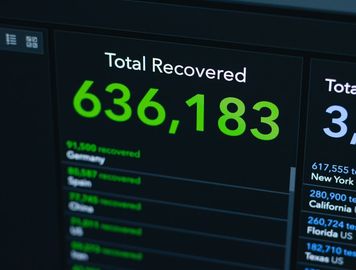
Unveiling the Top Reconciliation Tools for Contemporary Accounting
Financial leaders are grappling with the need to expedite closing processes without compromising on controls. With the surge in transaction volumes, the diversification of payment channels, and the proliferation of data sources, manual visual review and spreadsheet-based sign-offs pose a risk and become a bottleneck. Reconciliation tools aid contemporary accounting teams in standardizing workflows, automating matching, and generating defensible audit trails. This, in turn, bolsters the reliability of the figures that executives depend on.

Maximizing Efficiency in Your Financial Operations: A Deep Dive into Plaid Integrations
Finance teams are increasingly expected to close faster, enhance cash visibility, and maintain robust controls—often without expanding their team. The practical solution is not simply 'more dashboards,' but cleaner, more timely financial data that integrates into core workflows with minimal manual intervention. An efficiently designed bank data connectivity layer can reduce data latency, eliminate repetitive downloads, and create a reliable audit trail.

A Comprehensive Guide to Reconciling Bank Statements in QuickBooks Online
Reconciling bank statements in QuickBooks Online is more than just a bookkeeping routine—it is a critical control activity that safeguards cash, validates revenue recognition inputs, and prevents small timing errors from becoming significant misstatements. For CFOs and finance leaders, an efficient reconciliation process reduces close time, improves confidence in cash reporting, and creates an evidence trail that withstands audit scrutiny. When the process is formalized and repeatable, reconciliation becomes a predictable part of the monthly close rather than a firefight.

Mastering Bank Reconciliation in Excel: A Comprehensive Guide for Finance Professionals
Bank reconciliation is one of the highest-leverage controls in a finance organization: it validates cash integrity, detects errors early, and provides a defensible audit trail. Yet many teams still treat it as a monthly scramble—exporting bank activity, manually matching items, and chasing explanations days before close. Done well, an Excel-based reconciliation becomes a repeatable operational process that reduces close risk while improving visibility into cash timing and working capital.

Enhancing Your Accounting Processes with Odoo Bank Reconciliation
The most efficient finance teams don’t “work harder” at month-end—they design away avoidable work. Bank reconciliation is a prime example: when matching is manual, inconsistent, or poorly controlled, it creates downstream issues in cash visibility, exception management, and close timelines. Done well, reconciliation becomes a predictable, low-friction control that improves both accuracy and decision-making.

Enhancing Your Business' Financial Efficiency with QuickBooks Online
Strategic Overview

Harnessing QuickBooks Online Basic: A Comprehensive Guide for Financial Professionals
Finance leaders often view entry-level accounting platforms as merely for bookkeeping, but this assumption can subtly compromise control, visibility, and decision-making speed. With the right operating model, QuickBooks Online Basic can support disciplined month-end close, credible management reporting, and audit-ready processes—especially for lean teams that need standardization more than complexity. However, plan features may vary by region and date, so it's important to confirm in-product.

Comprehensive Guide: Accounting for Ecommerce Business and Best Practices
Ecommerce finance looks deceptively simple: sell an item, ship it, get paid. In practice, the accounting is fragmented across storefronts, payment processors, marketplaces, logistics partners, tax engines, and banks—each with its own timing and data structure. For CFOs and controllers, accounting for ecommerce business is largely an integration and controls challenge: ensuring every order flows into the general ledger with accurate revenue, fees, taxes, and inventory impacts.
Exploring the Benefits and Costs of QuickBooks Outsourcing for Finance Professionals
Finance leaders are under steady pressure to close faster, report with greater precision, and keep costs variable as the business changes. Yet the workload inside most accounting teams is still dominated by routine tasks: transaction coding, reconciliations, vendor management, and periodic clean-up that compounds when process discipline slips. QuickBooks outsourcing has emerged as a pragmatic operating model for organizations that want a reliable accounting engine without permanently expanding headcount.

Optimizing Accounting Operations with Connex for QuickBooks Desktop
Finance leaders managing mature back-office operations frequently encounter a common dilemma: legacy systems offer stability, but manual accounting procedures continue to consume time and increase risk. As transaction volumes increase—through more sales channels, more payment methods, more vendors—the 'steady state' becomes unstable. The outcome is predictable: reconciliations take longer, correcting mis-posted entries turns into a recurring fire drill, and stakeholders lose faith in the timeliness of reporting.

10 Categories of Software Tools for Bank Account Reconciliation: A Vendor-Neutral Review
Bank account reconciliation may seem straightforward—matching bank activity to the general ledger, explaining discrepancies, posting corrections—but it quickly becomes complex at scale. High volumes, timing differences, multiple bank accounts, and inconsistent remittance details can turn a monthly close bottleneck into a significant risk. The right software tools for bank account reconciliation can reduce manual effort, enhance accuracy, and create an audit-ready trail that stands up to scrutiny.

Exploring the Advantages of Oracle Transaction Matching for Efficient Accounting
Accounting teams rarely struggle because they lack data—they struggle because the data doesn’t agree. Bank activity, subledgers, intercompany, payments, and operational systems all generate transactions with slightly different references, timing, and formatting. The result is a reconciliation workload that grows with volume, not with insight. Oracle Transaction Matching addresses that pain point by automating high-confidence matches, managing exceptions with workflow, and producing a defensible audit trail.

Understanding the Advantages and Disadvantages of an Outsourced CPA for Your Business
Finance leaders are under constant pressure to deliver faster closes, more reliable forecasts, and tighter compliance—often with lean teams and growing operational complexity. In that environment, an outsourced CPA can be an effective way to access specialized technical expertise and scalable capacity without committing to a full-time hire. The model can work particularly well for businesses that need senior-level accounting judgment, project-based support, or a backstop for internal teams during peak periods.

Maximizing Efficiency with QuickBooks Sync: A Comprehensive Guide for Financial Professionals
Finance teams often grapple with a common issue: while leadership demands quicker reporting, the accounting function requires accuracy, control, and auditability. As transactions increase and systems multiply (including bank feeds, payroll, expense capture, e-commerce, billing, and others), the finance team often finds itself spending excessive time re-keying data, resolving mismatches, and justifying numbers post-factum.

How an Amazon Seller Accountant Can Enhance Your Business Revenue
Marketplace businesses don't usually fail because demand vanishes—they fail because finance can't see what's actually happening beneath the top-line sales. Settlement cycles, withheld reserves, returns, chargebacks, multi-channel fees, and inventory timing can distort reported revenue and conceal margin leakage. When leadership relies on simplified dashboards rather than reconciled financials, pricing decisions, ad budgets, and replenishment plans often drift away from economic reality.

Boosting Efficiency with Time Tracking Software that Integrates with QuickBooks Desktop
Strategic Value

Elevating Financial Operations: The Impact of Transaction Management Systems for CFOs
In today's fast-paced business environment, CFOs are often tasked with doing more with less: shortening close cycles, increasing forecast accuracy, reducing fraud exposure, and ensuring compliance—all while transaction volumes continue to rise. In this context, transaction management systems have evolved from a 'nice-to-have' back-office upgrade to an operational necessity that directly impacts cash, risk, and decision-making quality. A well-chosen platform can transform disparate payments, approvals, and reconciliations into a governed, auditable workflow.

Navigating a POS System That Integrates With QuickBooks: A Comprehensive Guide for Financial Professionals
Finance teams feel the immediate impact of POS decisions: revenue recognition timing, inventory valuation, cash reconciliation, and the speed of month-end close all change once transactions start flowing. A QuickBooks-integrated POS system can reduce manual entry and improve auditability, but only if the integration is designed around financial controls—not just operational convenience.

Boosting Productivity: How QuickBooks Automation Can Improve Close Speed, Controls, and AP Efficiency
Finance teams are increasingly expected to achieve more with the same resources—accelerated closes, tighter cash visibility, and stronger compliance—while transaction volume continues to rise. In such a scenario, automation ceases to be a mere 'nice-to-have' and becomes a structural advantage that mitigates operational risk and liberates high-value talent for analysis, partnering, and decision support.

Unveiling the Optimal Accounting Software for SaaS Businesses: An In-Depth Guide
Finance teams in the SaaS sector operate at the crossroads of recurring revenue, rapid growth, and escalating compliance expectations. The difference between 'adequate' accounting and a SaaS-optimized finance stack emerges swiftly: month-end close timelines extend, revenue schedules become fragile, and board reporting transforms into a complex task of data analysis.

Mastering the Art of Reconciling GL Accounts: A Comprehensive Guide
For finance leaders, the concern isn't about routine transactions—it's about the unknown elements lurking in the ledger: outdated accruals, unreconciled clearing accounts, and 'temporary' balances that never reverse. To mitigate these uncertainties, the most reliable method is to reconcile GL accounts using a repeatable process, clear ownership, and robust evidence that withstands scrutiny.

Mastering QuickBooks Cloud Pricing for Your Business: A Comprehensive Guide
Choosing a cloud accounting subscription is no longer a simple “pick a plan” decision—it’s a multi-variable cost model that impacts compliance, controls, and operating leverage. For CFOs and finance leaders, the goal is not to find the cheapest monthly rate, but to forecast total cost of ownership, understand what triggers upgrades, and ensure the system supports auditability as transaction volumes and teams scale.

Mastering Automated Invoicing in QuickBooks: A Comprehensive Guide for Finance Professionals
Finance leaders rarely lose sleep over creating a single invoice; they lose sleep over the exceptions: missed billings, incorrect terms, and disputes that delay cash. Automated invoicing can address those risks, but only when it is implemented with clear controls, disciplined master data, and measurable outcomes. In this guide, you’ll learn how to use QuickBooks' recurring invoicing capabilities to build a scalable billing engine that finance can trust.

Optimizing Efficiency Through QuickBooks Invoice Automation: An In-Depth Guide for Financial Leaders
Introduction

Evaluating QuickBooks Online Packages: A Comprehensive Guide for Financial Leaders
Financial leaders rarely choose an accounting system based on features alone; the decision is about governance, close speed, auditability, and how well the tool supports your operating model. This article evaluates QuickBooks Online packages from a CFO and controller perspective, focusing on what changes materially by tier: user access, automation depth, reporting structure, and the quality of supporting workflows.
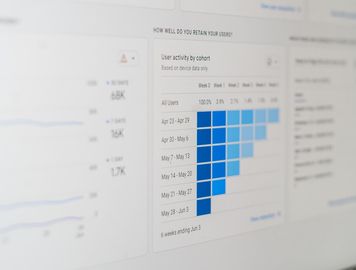
How to Streamline Your Close Process with Spreadsheet Sync QuickBooks
Finance teams continue to depend on spreadsheets for analysis, planning, and operational handoffs—even when the general ledger is fully digital. The challenge is not the spreadsheet itself; it’s the time-consuming re-entry, version drift, and lack of traceability that occur when workbook data must be manually transferred into the accounting system. Done effectively, spreadsheet sync QuickBooks can maintain spreadsheet flexibility while eliminating much of the repetitive posting work that slows down close.

Maximizing Efficiency with Automated Bank Transfers in Accounting
Finance teams are continually challenged to expedite closure, minimize risk, and provide more timely cash visibility—without increasing headcount. Yet, many organizations still depend on manual payment initiation, spreadsheet trackers, and ad hoc approvals, leading to avoidable exceptions in reconciliation and month-end close. The outcome is predictable: inconsistent documentation, higher error rates, and a hard-to-audit 'shadow process' of email-based approvals.
Leveraging the QuickBooks Online Help Center: A Comprehensive Guide for Finance Professionals
Finance leaders rarely struggle due to a lack of tools; they struggle because answers are scattered, tribal knowledge is inconsistent, and urgent month-end issues collide with limited time. In that environment, the QuickBooks Online Help Center can be more than a troubleshooting library—it can become your team’s operational playbook for consistent processing, clean close, and lower support dependency.
Leveraging Efficiency: Harnessing the Power of Connex for QuickBooks in Financial Management
Today's finance teams are expected to close faster, forecast more accurately, and deliver audit-ready reporting—often without proportional headcount growth. The constraint is rarely effort; it’s usually friction across systems, inconsistent transaction coding, and manual reconciliations that create delays and rework. The most effective finance leaders address this by standardizing how operational data becomes accounting data, and by putting controls around that flow.

Harnessing Connex for QuickBooks for Streamlined Financial Management: A Comprehensive Guide for Finance Leaders
Modern finance teams are often challenged to close faster, deliver results with confidence, and maintain audit-ready controls, even as transaction volumes escalate. In such a scenario, the cost of manual work multiplies: duplicated entries, inconsistent mappings, and delayed reconciliations create downstream reporting risks that surface when leaders need answers promptly.

Navigating QuickBooks Compatible Software: Essential Tools for Financial Experts
Finance professionals are constantly tasked with closing faster, forecasting with greater accuracy, and maintaining robust controls—often without increasing staff. This challenge is precisely why many financial leaders delve into QuickBooks compatible software: the right add-ons can automate high-volume workflows, minimize manual reconciliations, and generate cleaner audit trails while preserving the general ledger as the source of truth.




A Comprehensive Guide: Reconciling Credit Cards in QuickBooks Online for Finance Experts
A structured credit card reconciliation process is one of the quickest ways to enhance the quality of closure, minimize expenditure leakage, and bolster audit readiness. For CFOs and finance leaders, reconciling credit cards in QuickBooks Online is more than a mundane task—it's a control activity that verifies the completeness, accuracy, and timing of expense recognition. When credit card activity is of high volume and decentralized, reconciliation becomes a crucial safeguard that prevents miscoding, duplicates, and missing liabilities from altering financial statements.
Optimizing Your Business Operations with Jobber QuickBooks Integration: A Comprehensive Guide
Finance leaders in service businesses often grapple with a common set of challenges: duplicate data entry between operations and accounting, inconsistent invoice details, delayed deposits, and month-end surprises that disrupt forecasting. The promise of Jobber QuickBooks integration is straightforward—link operational job and customer activity to accounting records to ensure revenue, receivables, and cash application flow with fewer handoffs and fewer errors.

Exploring the Future: How AI Software for Accounting Is Changing the Finance Industry
Finance leaders are witnessing a fundamental shift: accounting is transitioning from periodic, manual workflows to continuous, data-driven operations. The catalyst is AI software for accounting, which merges machine learning, natural language processing, and workflow automation to reduce effort in routine processing while enhancing the speed and quality of decision support. For CFOs, controllers, and accounting leaders, the real question is not whether AI will be used, but where it should be deployed first—and how to govern it.

Navigating the Intersection of Fintech and Accounting: A Guide for Modern Finance
Finance leaders are at the forefront of a fundamental shift where software-enabled financial services and modern accounting operations are becoming increasingly intertwined. The convergence of fintech and accounting extends beyond faster payments or digital ledgers—it's about reengineering how data is captured, validated, reconciled, and transformed into management insight. As transaction volumes increase and stakeholder expectations rise, the finance function is being tasked to deliver both speed and assurance.
Grasping the Influence of FinTech Accounting on Conventional Financial Services
Traditional financial services are being reshaped by faster payments, embedded finance, real-time customer expectations, and increasingly automated back offices. At the heart of this change is FinTech Accounting: not a new set of standards, but a new operating reality where transaction volume is higher, settlement is faster, data is richer, and assurance must be continuous rather than periodic.

How to Evaluate the Best Reconciliation Software: A CFO Framework
Finance leaders may not always receive credit for successful reconciliations, but the consequences of errors are immediately felt. A single unreconciled bank account, a misposted journal entry, or an unreviewed intercompany balance can lead to delayed closes, audit findings, and a loss of trust in reported numbers. That's why selecting the best reconciliation software is not just a tool choice; it's a decision about process integrity, governance, and the speed at which your organization can act on reliable data.

Plaid Integration: An In-Depth Guide for Financial Leaders
Plaid Integration is often viewed as a technical connection, but for CFOs and controllers, it's primarily a finance operating model decision: how bank and transaction data enters your books, how it is controlled, and how it supports an auditable close. When implemented correctly, bank-data connectivity reduces spreadsheet dependency, shortens the time-to-insight for cash and spend, and enhances the quality of reconciliations by standardizing transaction ingestion.
How to Evaluate Free Home Accounting Software: A CFO's Perspective
Finance professionals often overlook household bookkeeping as 'lightweight,' yet the underlying requirements—accuracy, traceability, and secure documentation—mirror the standards you apply at work. Whether you're managing personal cash flow, a rental portfolio, or a consulting side practice, the right home accounting software free can provide a disciplined ledger, clean categorization, and reliable reporting without introducing unnecessary cost. However, 'free' can sometimes mean limited controls, restricted exports, or unclear data retention policies.

Optimizing Financial Operations: A Detailed Guide on QuickBooks and Shopify Integration
Finance leaders often face the challenge of acquiring reliable, close-ready data that can be quickly reconciled and used to make informed decisions. The potential of QuickBooks and Shopify integration lies not just in automation, but in the controlled flow of sales, refunds, fees, taxes, and deposits into the ledger with minimal manual intervention and clear audit trails.
Improving Efficiency: A Comprehensive Guide to QuickBooks Shopify Integration for Financial Managers
Financial managers are increasingly finding themselves at the crossroads of e-commerce operations and accounting governance. When order volume escalates, the manual handoffs between storefront data, payment activity, and the general ledger emerge as a significant risk: misstatements, delayed close, and diminished confidence in margin reporting. A well-structured QuickBooks Shopify integration is one of the most effective ways to alleviate that friction while enhancing traceability from order to ledger.

Optimizing Accounting Workflow with QuickBooks Spreadsheet Sync: A Comprehensive Guide
Despite the systematization of the general ledger, finance teams continue to depend on spreadsheets for analysis, planning, and ad hoc reporting. The friction point is invariably the same: data is transferred between the ledger and spreadsheets through exports, copy/paste, and manual imports, leading to delays, rework, and confusion over versions. A well-governed QuickBooks spreadsheet sync bridges this gap by keeping structured accounting data in sync with spreadsheet models and templates.

Navigating the Future: How Accounting Automation AI Transforms the Role of Finance Professionals
Finance teams are transitioning into a phase where automation isn't merely confined to rules-based scripts or basic integrations. With Accounting Automation AI, systems can interpret documents, identify anomalies, propose reconciliations, and learn from exceptions—altering how work is assigned, reviewed, and enhanced. The practical question for leaders is not whether automation will arrive, but how to adopt it without compromising controls, auditability, or accountability.

Mastering the Process: How to Reconcile a Credit Card in QuickBooks
Reconciling corporate cards may seem like a routine task—until it isn't. A few missed merchant credits, a delayed statement close date, or an employee expense coded to the wrong period can create downstream issues: misstated expenses, duplicate liabilities, and a month-end close that drags on. For CFOs and controllers, the reconciliation isn't just about 'matching transactions'; it's a key control that supports financial integrity, cash planning, and audit readiness.

How to Reconcile Bank Account in QuickBooks Online: A Comprehensive Guide
Bank reconciliation is more than just 'checkbox accounting.' For CFOs and finance leaders, it is a control activity that safeguards cash, supports the completeness and accuracy of cash postings, and prevents compounding errors that distort KPIs. When performed consistently, reconciliation reduces close-cycle volatility and enhances confidence in cash forecasts, covenant reporting, and board-ready financial statements.


Streamline Your Finances: How to Automate ACH Payments
Automating bank-to-bank payments is no longer a luxury reserved for the back-office—it’s a lever for tighter cash control, fewer errors, and more predictable operations. When finance teams rely on manual initiation, spreadsheet-based approvals, and ad hoc bank portal activity, they introduce timing risk, key-person dependencies, and avoidable processing costs. The goal isn’t just speed; it’s building a repeatable payment system with auditability, segregation of duties, and clear accountability.

Optimizing Financial Operations with Automated ACH Payments: A Comprehensive Guide for CFOs
Automated bank transfers have transitioned from being an optional feature to a core finance capability. For CFOs, the case is clear: fewer manual touchpoints, stronger control evidence, and enhanced cash forecasting due to predictable electronic payment schedules. Yet, transitioning from ad hoc file uploads to comprehensive end-to-end automation requires more than just enabling a payment rail—it necessitates governance, data discipline, and a control framework that stands up to audit scrutiny.


Navigating the Future: The Advantages of Adopting Financial Close Automation in Accounting
Modern Close Imperative
Assessing QuickBooks Online Accountant Pricing: A Worthwhile Investment?
Finance leaders seldom regret investing in the right systems; their regret often stems from investing in the wrong ones—or investing without a clear value model. That's why assessing QuickBooks Online Accountant pricing should be approached as a capital allocation decision, even when it's 'merely' a subscription. The aim is not to pursue the lowest monthly fee, but to acquire measurable efficiency, stronger controls, and improved reporting cadence.

Optimizing QuickBooks Order Management: A Comprehensive Guide for Finance Professionals
Finance teams often inherit order-to-cash processes that “work” operationally but create downstream friction: incomplete customer data, inconsistent pricing, late invoicing, and revenue recognized with more manual work than necessary. Over time, these gaps show up as avoidable write-offs, delayed collections, and month-end firefighting. Optimizing QuickBooks order management is less about adding steps and more about defining a clean, auditable path from quote to cash.

Maximizing Efficiency with Corporate Credit Card Reconciliation Software: An In-depth Review
Modern finance teams are being asked to close faster, forecast more accurately, and enforce tighter controls—often without adding headcount. Corporate card programs can help with agility, but they also create high-volume, high-variance transaction streams that are notoriously hard to reconcile consistently. Corporate credit card reconciliation software addresses this gap by automating matching, codification, approvals, and exception handling while maintaining audit-ready documentation.

Maximizing Your Business Efficiency with Commerce Sync for QuickBooks: An In-Depth Guide
Modern finance teams are being asked to close faster, report with more precision, and maintain stronger controls—often while transaction volumes grow and sales channels multiply. In that environment, “sync” stops being a technical convenience and becomes a finance operating model: how transactions are captured, categorized, reconciled, and reported with minimal human touch.

Boosting Financial Efficiency with Commerce Sync QuickBooks: A Guide for Finance Professionals
Finance teams rarely face challenges due to lack of data. The struggle usually arises when data arrives late, in inconsistent formats, or without context. For multi-channel businesses, this is amplified: orders, refunds, fees, taxes, and payouts move on different timelines, and the general ledger becomes a patchwork of partial truths. A well-designed ecommerce accounting integration can change that by standardizing how commercial activity becomes financial records.

Achieving Mastery in Reconciliation in QuickBooks Online: An In-Depth Guide for Finance Professionals
Finance leaders depend on reconciliations to transform bank activity into reliable financial statements. However, many teams view it as a routine 'match the ending balance' task, overlooking the broader objective: affirming completeness, accuracy, cut-off, and classification of cash activity with an audit-ready trail. This guide is meant for CFOs and finance professionals seeking robust controls, expedited close, and fewer surprises.

Mastering How to Reconcile QuickBooks Online for Enhanced Financial Precision
Enhancing financial precision is seldom achieved through a single 'big fix.' It's usually the outcome of consistent, well-controlled processes performed uniformly every period, with clear ownership and measurable outcomes. Bank and credit card reconciliation is central to this discipline as it aligns your books with independent third-party statements and allows errors to be identified promptly.

Boosting Your Business Efficiency: A Detailed Guide to QuickBooks Ecommerce Integration
Strategic Overview

Optimizing Your Operations: A Comprehensive Review of Free Accounting Software Download Choices
Today's finance teams are faced with the challenge of closing faster, producing cleaner audit trails, and delivering decision-grade reporting—often without expanding their teams. This has led to a growing interest in any free accounting software download that promises immediate relief on licensing costs and setup time. The potential benefits are significant, but the risks are equally real: issues like data ownership, support limitations, and control gaps can quickly negate the savings if not addressed upfront.

Enhancing Accuracy in Finance: A Comprehensive Guide to Techniques and Best Practices
Finance leaders rarely grapple because they lack data—they grapple because they can't trust it. When reporting is inconsistent, forecasts fluctuate wildly, or close cycles reveal repeat errors, the business bears the cost through delayed decisions, avoidable write-offs, and reputational risk. Therefore, building accuracy finance is a strategic priority, not a back-office task, as every executive decision hinges on the integrity of financial information.

Maximizing the QuickBooks Help Center: A Comprehensive Guide for Financial Professionals
Financial organizations don't falter due to a lack of accounting knowledge; they stumble when answers are scattered across emails, chat threads, and tribal memory. When a posting error surfaces at 5:30 p.m. on close day, the difference between a controlled fix and a risky workaround often hinges on how quickly the team can locate a reliable, repeatable resolution. For many finance leaders, the QuickBooks Help Center evolves into the 'single source of truth' for product guidance—if utilized with the appropriate discipline. Please note that the Help Center content is product guidance, not accounting or tax authority, and should be aligned with internal policy, GAAP/IFRS, and tax/payroll advisors where applicable.

Maximizing Efficiency: A Comprehensive Guide for Finance Professionals on QuickBooks Online POS
Finance teams often inherit point-of-sale data that is operationally 'good enough' but financially inconsistent—mis-coded taxes, unclear discounting, delayed deposits, and inventory adjustments that arrive too late for a clean close. The result is predictable: manual clean-up, reconciliations that sprawl across spreadsheets, and month-end surprises that erode confidence in reporting.

Optimizing Performance: How to Evaluate Construction Project Management Software That Integrates With QuickBooks
Finance teams in construction live at the intersection of operational complexity and accounting precision: multi-phase jobs, change orders, retention, subcontractor billing, equipment costs, and strict customer reporting. When project data is in one system and accounting is in another, the result is predictable—manual rekeying, delayed visibility into job margins, and painful month-end closes. A common approach is construction project management software that integrates with QuickBooks, allowing project teams to manage work in one place while finance keeps the general ledger clean and timely.

Evaluating Free Accounting Software: A Comprehensive Guide for Finance Professionals
Finance leaders are increasingly asked to “do more with less,” and the software budget is often the first place stakeholders look for savings. That pressure has made free accounting software a frequent topic in CFO conversations—especially for early-stage entities, small operating units, project-based teams, or regions where adoption needs to happen quickly.

A Comprehensive Guide to Financial Reconciliation Tools
Finance leaders are tasked with closing faster, providing more reliable reporting, and maintaining stronger controls—often with lean teams and burgeoning transaction volumes. In this scenario, financial reconciliation tools have transitioned from being a 'good to have' to an essential component that ensures the alignment of subledgers, bank activity, and the general ledger while preserving audit evidence.



Maximizing Transaction Management Software for Real Estate Agents: A Comprehensive Guide for Finance Professionals
Executive Overview

Enhancing Efficiency and Accuracy with Robotic Process Automation in Accounting
Finance departments are consistently tasked with closing faster, scaling transaction volumes, and improving audit readiness, often with limited resources. The most significant constraint is seldom accounting knowledge; instead, it is the repeatable, rule-based tasks spread across spreadsheets, inboxes, and various systems. Robotic process automation in accounting addresses this constraint by employing software 'bots' to carry out standardized tasks, similar to a trained employee, but with consistent timing, logging, and fewer input errors.

Maximizing Financial Management Efficiency: An In-Depth Look at CRM Systems Integrated with Intuit Ecosystem
Finance leaders are increasingly expected to deliver faster closes, tighter controls, and more predictive insights—often with the same or smaller teams. The friction point is rarely the general ledger itself; it’s the handoffs between customer interactions, sales commitments, billing triggers, and cash collection. When those handoffs run on emails, spreadsheets, and informal approvals, you get revenue leakage, disputed invoices, and a close process that depends on undocumented process knowledge.

Mastering ACH Auto Payment: A Comprehensive Guide for Finance Professionals
Modern finance teams are under pressure to reduce manual work, improve cash visibility, and strengthen controls without slowing down operations. One of the most practical ways to achieve those goals is automating predictable payments through the ACH network, where bank-to-bank transfers can be scheduled, authorized, and monitored with clear audit trails.

Mastering the Ecommerce Landscape: A Comprehensive Guide to Ecommerce Accounting Services
Ecommerce finance may seem deceptively simple from the outside: gather payments, dispatch orders, and calculate the profit. In reality, CFOs navigate a complex ecosystem of marketplaces, payment processors, refunds, chargebacks, promotional funding, cross-border taxes, and inventory movement across warehouses and fulfillment partners. When data arrives late or unreconciled, close timelines extend, margin narratives weaken, and leadership decisions are based on estimates.

Optimizing Financial Operations with AI Bookkeeping Software
Finance teams are under pressure to deliver faster closes, higher-quality reports, and tighter controls—often without proportional headcount growth. In this scenario, AI bookkeeping software has emerged as a practical tool for modernizing daily accounting execution, rather than a speculative "future" technology. When applied to high-volume tasks like transaction coding, invoice capture, and bank matching, it can reduce manual effort while improving consistency.

Analyzing Square and QuickBooks: An In-depth Guide for Finance Professionals
Finance leaders often inherit system choices made by operations: a payments tool selected for speed at the point of sale, and an accounting ledger chosen for compliance and reporting. The real work begins when finance must make these tools behave like a single, controlled financial system—one that supports timely close, reliable cash visibility, and audit-ready documentation. In practice, analyzing Square and QuickBooks is less about features and more about how each impacts risk, process efficiency, and decision-quality.

Enhancing Your Financial Operations with Bank Account Reconciliation Software
Finance teams often face challenges not because they don't understand what to reconcile, but because the work is repetitive, exception-heavy, and time-sensitive. As transaction volumes increase, payment methods diversify, and bank activity becomes more complex, manual matching in spreadsheets can become a significant operational risk. Bank account reconciliation software assists organizations in standardizing matching rules, centralizing evidence, and creating audit-ready workflows that scale with growth.

Navigating E commerce bookkeeping: Essential Tips for Finance Professionals
E commerce bookkeeping looks deceptively simple—sales come in, cash hits the bank, and the accounting system records revenue. In practice, the finance function is managing multiple sales channels, several payment processors, frequent refunds, chargebacks, and a fee stack that can exceed 8–15% of gross sales depending on mix. The result is a high-volume environment where small classification errors compound into large margin distortions and working-capital surprises.

Mastering E-commerce Bookkeeping: A Comprehensive Guide for Finance Leaders
E-commerce Bookkeeping is more than just 'bookkeeping for online sales.' It is an operating model that reconciles orders, payments, returns, platform fees, taxes, and inventory movements into a coherent, auditable general ledger—often across multiple sales channels and payment rails. For CFOs and finance leaders, the challenge is less about posting transactions and more about ensuring completeness, cutoffs, and classification when data is dispersed across storefronts, marketplaces, processors, banks, and logistics partners.

Maximizing Your Financial Efficiency: The Role of a QuickBooks Online ProAdvisor
Finance teams rarely struggle because they lack data; they struggle because data arrives late, inconsistently coded, and difficult to trust. For CFOs, controllership teams, and business leaders, “financial efficiency” means a dependable close, reliable management reporting, and a workflow that scales without adding headcount at the same rate as revenue. The right combination of standardized processes, automation, and accountability can cut rework dramatically, but it requires disciplined configuration and ongoing stewardship.

Boosting Efficiency with Inventory Management Software that Integrates with QuickBooks
Executive Overview

Decoding the Role of an Accountant for Amazon Sellers: Steering through the Financial Landscape
Navigating the financial landscape of the Amazon marketplace can be deceptively complex: robust sales can mask lagging cash flow, fees silently erode margins, inventory ties up working capital, and improperly handled returns can distort revenue. For CFOs and finance leaders, the challenge extends beyond merely 'keeping the books.' It involves constructing a reliable financial system capable of withstanding audits, supporting forecasting, and producing decision-grade profitability data by SKU, channel, and cohort.

Integrating Stripe with QuickBooks: A Finance Leader's Guide to Reconciliation and Controls
Integrating online payment processing with your accounting system is no longer a luxury for finance teams; it is a prerequisite for maintaining clean books, timely reporting, and controlled cash operations. As transaction volume increases, the operational burden shifts from simply 'recording sales' to managing fees, disputes, refunds, and payout timing—all while preserving auditability and a fast close. A well-structured Stripe–QuickBooks integration can reduce manual journal entries, increase reconciliation accuracy, and improve visibility into net cash.

Maximizing Financial Efficiency: A Guide on Integrating Stripe and QuickBooks
Finance teams feel the strain most acutely where revenue operations meet accounting: high transaction volumes, fragmented data, time-consuming reconciliation, and pressure to close faster without weakening controls. Integrating Stripe and QuickBooks is one of the highest-leverage moves a finance leader can make to modernize cash application and revenue accounting, because it connects payments activity directly to the ledger in a repeatable, auditable way. For a broader view of workflow design inside your accounting platform, refer to comprehensive guides available online.

Mastering QBO Spreadsheet Sync for Efficient Financial Management
Efficient accounting is rarely about doing more work—it’s about designing workflows that prevent rework. For many finance teams, the spreadsheet remains the operating layer for planning, allocations, and management reporting, while the ledger remains the system of record. The friction comes from moving data between the two: manual exports, copy/paste errors, version confusion, and late-stage reconciliations that inflate close timelines.

Mastering Bank Reconciliation in NetSuite: A Comprehensive Guide for Finance Leaders
Cash is the most frequently touched balance on the balance sheet—and the easiest place for small process gaps to become material problems. Done effectively, bank reconciliation in NetSuite is not just a monthly task; it is a repeatable control that validates cash activity, confirms the completeness of posting, and improves confidence in cash reporting. For CFOs and controllers, the goal is straightforward: shorten the time from bank statement availability to reconciled, reviewed, and posted results.

Mastering NetSuite Bank Reconciliation: A Comprehensive Guide for Financial Professionals
Finance leaders often grapple with the task of reconciling cash consistently, quickly, and with defensible controls at scale. As transaction volumes increase, bank activity becomes more complex, and stakeholders expect near real-time cash visibility, a weak reconciliation process can become a covert burden on the close. However, when done well, NetSuite bank reconciliation becomes a repeatable operational process that safeguards cash, reduces manual effort, and strengthens audit readiness.

Exploring the Best Free Accounting Software for Small Business: A Comprehensive Guide
Choosing the best free accounting software for small business is rarely a “cost-only” decision. For CFOs and finance leaders, the real question is whether a free platform can deliver reliable books, a controllable close process, and decision-grade reporting without introducing unacceptable operational or compliance risk. Free tools can work well in specific use cases—especially for early-stage operations, lean back offices, and simpler entity structures—but the selection criteria must be deliberate.

Leading the Charge: The Impact of a Cloud Accountant in Today's Finance Landscape
Today's finance landscape is being revolutionized by continuous operations, geographically dispersed teams, and stakeholders demanding answers in hours, not weeks. Within this dynamic, the cloud accountant has emerged as a beacon for speed and reliability, merging accounting precision with systems thinking, data discipline, and process design. This evolution is not merely about 'moving books online'; it involves re-engineering data flows, control mechanisms, and how leaders assimilate information.

Maximizing QuickBooks and Shopify for Efficient Accounting Practices
The finance function in commerce businesses often inherits operational complexity: high transaction volumes, multiple payment methods, returns, discounts, shipping revenue, and frequent catalog changes. When order data and accounting records diverge, the result is predictable—time-consuming reconciliations, unclear margin performance, and delayed decision-making. The most effective teams design their processes so that the commerce platform becomes a reliable subledger and the general ledger remains the system of record.

QuickBooks–Shopify Integration for Finance Teams: Controls, Mapping, and Close Acceleration
Finance leaders inherit more than sales growth from ecommerce—they inherit complexity. When order volume increases, the accounting burden grows exponentially: multiple payment methods, refunds, chargebacks, shipping income, platform fees, promotions, gift cards, and tax rules create a dense transaction web. A well-designed QuickBooks Shopify integration is one of the most effective strategies a CFO can employ to improve close speed, audit readiness, and decision-quality reporting.

Leveraging QuickBooks Artificial Intelligence for Efficient Accounting
Accounting leaders are constantly under pressure to close faster, forecast more accurately, and maintain audit-ready controls—often with leaner teams. The most effective path isn’t “more tools,” but smarter workflows that reduce manual touchpoints while strengthening review. QuickBooks artificial intelligence sits at this intersection, utilizing machine learning and rule-based automation to streamline routine accounting tasks and highlight exceptions that require human judgment.

Harnessing QuickBooks AI for Efficient Accounting and Financial Reporting
Strategic Overview

Mastering Software as a Service Accounting: A Comprehensive Guide for Finance Leaders
Why SaaS Differs

Optimizing Financial Management with QuickBooks Scheduling Software
In the realm of finance, a 'schedule' is not merely an operational concept—it serves as a leading indicator of revenue timing, labor cost behavior, and working-capital pressure. When appointments, tasks, and fieldwork are scheduled inconsistently, finance teams experience the ripple effects in the form of delayed invoicing, margin leakage, and unpredictable forecasts. The objective is to transform the schedule into a reliable financial signal that can be governed, measured, and optimized.

Navigating the Best Account Reconciliation Tools for Today's Finance Professionals
Finance leaders are constantly striving to close faster, decrease risk, and provide decision-grade numbers—numbers that tie out to bank/subledger support with documented reconciling items and approvals—all without increasing their team size. The reconciliation process is crucial in this endeavor as it bridges the gap between operational reality (bank activity, subledgers, and external statements) and financial reporting. When done manually, it can become a cumbersome spreadsheet-heavy bottleneck that increases error rates and complicates audit evidence collection. However, if executed well, it can transform into a predictable, well-controlled workflow that management can trust.
Mastering the Art: How to Reconcile Credit Cards in QuickBooks Online
Reconciling credit cards is more than an accounting chore—it’s a frontline control for spend visibility, fraud detection, and month-end accuracy. For CFOs and finance teams, the goal is not simply to “get to zero,” but to build a repeatable process that reduces close time, tightens policy compliance, and improves confidence in operating expense reporting. Done well, reconciliation becomes a governance mechanism that prevents miscodings, missing transactions, and duplicate entries from cascading into inaccurate margin or budget analyses.

Achieving Excellence in Balance Sheet Account Reconciliation for Finance Leaders
A disciplined close relies on trust in the balance sheet. However, even robust teams can fall into routine reconciliations when deadlines tighten, employee turnover occurs, or transaction volume surges. When executed correctly, balance sheet account reconciliation provides a trail of evidence that assets, liabilities, and equity are complete, accurate, and supported, month after month.

Mastering Balance Sheet Reconciliation: A Comprehensive Guide for Finance Professionals
Balance sheet reconciliation is one of the most influential disciplines in controllership: it prevents misstatements, shortens close cycles, and instills confidence in management reporting. Yet many teams still treat reconciliations as a checklist exercise rather than a risk-based control that connects operational reality to the general ledger. When executed effectively, it becomes an early-warning system for process breakdowns, fraud risks, and integration issues across subledgers and bank activity.
Mastering the Process: How to Reconcile Balance Sheet Accounts Step-by-Step
Financial leaders rarely struggle with understanding what a balance sheet is; the operational challenge comes from ensuring that every line is complete, accurate, and properly supported—period after period. When teams reconcile rapidly but without precision, issues accumulate: stale accruals, misclassified cash, duplicated liabilities, and 'plug' entries that subtly distort working capital. The aim is not merely to match numbers; it is to create a system that makes errors difficult to introduce and easy to detect.

Credit Card Reconciliation in QuickBooks: Controls, Workflow, and Troubleshooting for Finance Teams
Finance teams often face challenges not because they don’t understand what reconciliation is, but because credit card data can be messy, timing can be inconsistent, and supporting documents may arrive late. When you reconcile credit card in QuickBooks with a disciplined process, you transform that mess into a repeatable, auditable control that safeguards the P&L and enhances close speed.

Mastering Credit Card Reconciliation in QuickBooks: A Comprehensive Guide for Finance Professionals
Credit cards are one of the fastest-moving transaction streams in a business—high volume, distributed spending, frequent refunds, and timing differences that can quietly distort the books. For CFOs and finance leaders, reconciling card activity is less about “checking a box” and more about ensuring expenses are complete, correctly classified, and supported for audit readiness. Done well, it reduces close friction, improves spend visibility, and prevents policy drift.

Harnessing Cloud Bookkeeping for Efficient Financial Management
Finance leaders are constantly tasked with reducing close cycles, enhancing cash visibility, and increasing confidence in management reporting—all while maintaining costs and risk. Traditional, file-based methods often fragment the source of truth across spreadsheets, email approvals, and local copies of ledgers, resulting in delays and control gaps. A modern approach transfers core transaction processing and reporting into interconnected systems that facilitate real-time collaboration and auditable workflows.

Enhancing Financial Operations: QuickBooks Project Management for CFOs
Finance leaders rarely struggle with "getting numbers" — they struggle with getting decision-grade numbers fast enough to run the business. In project-based environments, the core challenge is aligning operational activity (time, expenses, purchasing, milestones) with finance outcomes (margin, cash conversion, revenue recognition, and forecast accuracy). QuickBooks project management, when configured with the right controls and reporting rhythms, can help CFOs transition from lagging financial hindsight to near-real-time project intelligence.
How to Evaluate Free Online Accounting Software: A CFO Risk-First Guide
Finance leaders are often tasked with achieving more with less: accelerating closing times, enhancing forecast precision, tightening controls, and maintaining audit readiness—frequently without an increase in personnel. That's why the exploration of free online accounting software is a recurring topic among CFOs, particularly for new entities, pilot projects, subsidiaries, and early-stage business units that require structure without an immediate budget. The true advantage lies not in 'getting something for nothing,' but in establishing reliable financial operations with minimal friction while preserving flexibility for future growth.


Achieving Success with Automate Reconciliation: A Detailed Guide for Finance Professionals
Modern finance teams are under constant pressure to close faster, improve accuracy, and provide decision-ready reporting. Reconciliations sit at the center of that challenge: they are repetitive, time-consuming, and risk-prone when handled through spreadsheets, email approvals, and manual matching. However, with the right data discipline and workflow design, it's possible to automate reconciliation without sacrificing control.

Grasping the Concept of Auto Reconciliation in Accounting: Processes, Controls, and CFO Advantages
Why It Matters
Understanding and Implementing Automated Reconciliation in Finance
Finance teams are often tasked with closing faster, providing real-time visibility, and maintaining robust controls—typically without adding to their headcount. Reconciliation remains a bottleneck due to its repetitive, exception-heavy nature, and frequent reliance on spreadsheet-based processes that are difficult to govern. Automated Reconciliation addresses this by applying rules-driven matching, workflow, and audit trails to high-volume reconciliations, allowing teams to concentrate on exceptions rather than manual tick-and-tie.

Delving into Financial Integrations in Contemporary Accounting: Advantages, Challenges, and Control
In today's world, finance teams operate in an environment where data is produced ubiquitously: billing and procurement workflows, banking feeds, payroll cycles, inventory movements, and revenue schedules. In this context, Financial Integrations have transitioned from a “nice to have” to an operational necessity—particularly for organizations seeking faster closures, real-time reporting, and resilient controls. The difference between an efficient finance function and a perpetually reactive one often lies in the quality of data exchange between systems.


The Evolution of Accounting: Automation of Financial Statements and Its Influence on CFOs
Finance leaders are tasked with delivering faster closes, more reliable numbers, and insightful narratives—often with the same resources. In this scenario, automation of financial statements has transitioned from a 'nice to have' to a core capability. It enables teams to generate consistent reports directly from governed data flows, rather than relying on manual spreadsheets and last-minute reconciliations. For CFOs, the opportunity extends beyond speed; it provides a more controlled environment and a more scalable finance function.

Unlocking the Potential of Automated Financial Statements in Contemporary Accounting
Finance leaders are continually expected to deliver quicker closes, more robust controls, and increasingly predictive insights—often with the same team size. At the heart of this challenge is reporting: when statements are manually compiled from spreadsheets, email attachments, and disconnected systems, the accuracy and timeliness can be compromised. Automated financial statements replace monotonous assembly tasks with rules-based processes that compile, validate, and present results consistently.

Elevating Business Efficiency: An In-depth Guide on Financial Reporting Automation
The demands on finance teams have evolved. Stakeholders anticipate faster closes, more transparent narratives, and near real-time visibility—without increasing staff. Concurrently, finance is being asked to perform more strategic work: scenario planning, margin analysis, and performance management. Financial reporting automation is a practical solution to meet these expectations by standardizing data flows, reducing manual effort, and enhancing accuracy.

Optimizing Efficiency: A Detailed Guide to Salesforce QuickBooks Integration
Finance leaders don't typically grapple with a shortage of data—rather, they struggle with fragmented data. When the CRM holds customer and deal context while the accounting system contains invoices, payments, and GL detail, teams often spend hours reconciling different “versions of truth.” A well-executed Salesforce QuickBooks integration bridges this gap by aligning commercial activity with financial outcomes, thereby facilitating faster and more predictable reporting, forecasting, and cash collection.

Decoding the General Ledger Reconciliation Meaning: An In-Depth Guide for Finance Professionals
Understanding the general ledger reconciliation meaning goes beyond defining a term—it's about constructing a repeatable control that safeguards financial integrity. Essentially, general ledger reconciliation or GL reconciliation is the process of comparing GL account balances to reliable supporting documentation (subledgers, bank statements, schedules, or third-party confirmations) and resolving discrepancies, resulting in a balance that is complete, accurate, and appropriately classified. For CFOs and finance leaders, reconciliations serve as a key detective control against misstatements that could lead to skewed KPIs, covenant pressure, and audit complications.

A Control-First Playbook for Finance Leaders: How to Automate Accounting Processes Efficiently
Automation is more than a luxury in finance; it is a capacity strategy. As transaction volumes increase, regulations become more stringent, and stakeholders demand real-time visibility, manual accounting becomes a bottleneck and a control risk. The objective is not to eliminate judgment, but to standardize repeatable work so the team can concentrate on analysis, risk management, and decision support.

Maximizing Efficiency: The Role of Financial Reconciliation Software in Modern Accounting
The Importance of Reconciliation

A Comprehensive Guide to the GL Account Reconciliation Process
Finance leaders are not concerned about the transactions they can see—they are concerned about the balances they can’t explain. When account balances are not backed by reliable evidence, the close becomes slower, audit risk increases, and business decisions rest on uncertain numbers. A disciplined GL account reconciliation process is the most direct way to ensure every material balance on the balance sheet is accurate, complete, and defensible.

Maximizing Efficiency: A Comprehensive Analysis of Xero Cloud Accounting
Executive Overview

Boosting Efficiency with QuickBooks Online Integrations: A Comprehensive Guide for Finance Leaders
Strategic Overview
Appreciating the Role of Account Synchronization in Contemporary Accounting
Today's finance organizations operate in a world of segmented systems, distributed teams, and high expectations for real-time visibility. CFOs are expected to explain performance promptly, defend numbers confidently, and guide decisions with data that is both immediate and reliable. In this setting, account synchronization is a fundamental capability, not a back-office detail—it is the connective tissue that ensures ledgers, subledgers, bank data, and operational systems remain aligned.

The Crucial Role of Account Syncing in Contemporary Accounting Practices
Modern finance teams are anticipated to provide real-time visibility, audit-ready reporting, and sharper decision support—without expanding the team. This expectation clashes with a reality many CFOs are familiar with: vital data still resides in disconnected locations, from bank and card feeds to billing, payroll, and expense systems. Account Syncing bridges this gap by maintaining balances, transactions, and reference data synchronized across systems so that the ledger reflects what truly happened, and when it occurred.

Exploring the Features of QuickBooks Enterprise Online for Modern CFOs
Modern finance leaders are expected to deliver faster closes, cleaner data, tighter controls, and better forecasting—all while supporting growth. That makes accounting platform decisions less about “software preferences” and more about operating model design: who does what, when, with which approvals, and under which audit trail. If you’re evaluating QuickBooks Enterprise Online, the most useful lens is to map features to CFO outcomes: visibility, control, velocity, and scalability.

Simplifying the Accounting Process: A Comprehensive Guide to QuickBooks Accounts Payable Automation
Introduction
Optimizing Accounts Payable with AP Automation for QuickBooks: A Comprehensive Guide for Finance Professionals
Accounts payable is no longer just a back-office function measured only by cost per invoice. For CFOs and finance leaders, AP is a control environment, a cash forecasting input, a supplier relationship lever, and a source of decision-grade spend data. When AP is handled through inboxes, spreadsheets, and manual entry, the organization pays in delays, avoidable errors, approval bottlenecks, and limited visibility into committed cash.

Boosting Efficiency: An In-Depth Guide to QuickBooks AP Automation
Accounts payable is often one of the highest-volume, most control-sensitive finance functions in many organizations. It's also one of the easiest to overload with manual steps. When invoice intake, coding, approvals, and payments depend on emails, spreadsheets, and undocumented process knowledge, cycle times extend, duplicates sneak in, and month-end turns into a scramble. For CFOs and finance leaders, the cost is not just labor; it’s reduced working capital visibility, increased control risk, and strained vendor relationships.

Unlocking Efficiency: A Comprehensive Guide to Stripe QuickBooks Integration
In today's fast-paced finance world, teams are expected to close faster, deliver cleaner reporting, and provide decision-ready insight—without adding headcount. Payment data often becomes the bottleneck: deposits reach the bank net of fees, refunds take days to process, and chargebacks are managed in a separate portal. Handled manually, this complexity can lead to timing differences, misclassifications, and reconciliation fatigue that can slow down the close process.

Evaluating Cost-Effective Accounting Software for Small Business: A Comprehensive Guide for Finance Professionals
Finance leaders are frequently tasked with the challenge of finding a more affordable system, while at the same time improving close speed, reporting quality, and compliance. This is precisely why cost-effective accounting software for small business should be evaluated through a CFO lens: considering total cost of ownership, internal controls, scalability, and the ability to generate decision-ready reporting, rather than just basic invoicing capabilities.

The Comprehensive Guide to Reconciling Financial Statements for Finance Professionals
High-performing finance organizations understand that closing the books is not just about meeting deadlines—it’s about producing numbers that can withstand scrutiny from executives, auditors, lenders, and regulators. The process of reconciling financial statements transforms transactional activity into reliable reporting, ensuring that the balance sheet, income statement, and cash flow statement align with underlying subledgers, bank activity, and supporting schedules.

Mastering QuickBooks Online Advanced Pricing: A Detailed Guide for Finance Leaders
Finance teams rarely grapple with “what is the list price?”—they struggle with exceptions: customer-specific discounts, contract rates, time-bound promos, and approvals that must be auditable. That’s where QuickBooks Online Advanced Pricing becomes relevant, as it helps standardize how pricing rules are created, applied, and reviewed across customers and items.

Unveiling the Advantages of GL Reconciliation Software for Contemporary CFOs
Finance leaders are increasingly expected to close faster, provide more confident explanations of variances, and maintain robust controls—often without additional staff. In many organizations, the general ledger still depends on spreadsheets, email approvals, and manual tie-outs, which can lead to unnecessary risks and unexpected delays. This gap between expectations and tools is precisely where GL reconciliation software delivers value, particularly when the close calendar continues to tighten.
Optimizing Financial Efficiency with QuickBooks Online Accounting Services
Finance leaders are being asked to do more with less: shorter close cycles, stronger controls, cleaner audit trails, and real-time insight for decision-making. For many organizations, the most efficient path to tangible improvement is not a new ERP—it’s disciplined process design paired with a cloud accounting operating model. That’s where QuickBooks Online Accounting Services can become a catalyst for efficiency, particularly when paired with standardized workflows, clear roles, and a control-first mindset.

Exploring the Advantages of Automating Expense Management in Accounting
The Importance of Automating Expense Management

Assessing the Efficiency of Bookkeeping Outsourcing Companies in Financial Management Optimization
Finance leaders rarely find it difficult to locate providers; the real challenge lies in differentiating marketing claims from tangible operating efficiency. When you assess bookkeeping outsourcing companies with the same rigor you apply to internal teams—clear KPIs, control evidence, and repeatable workflows—you can significantly improve close speed, reporting reliability, and leadership confidence in the numbers. However, results may vary depending on the volume and maturity of controls.

Maximizing Financial Efficiency with Outsourced Bookkeeping Companies
Finance leaders are increasingly asked to do more with less: speed up month-end close, improve data quality, support audits, and produce decision-ready reporting—often without increasing staff. This challenge has made outsourced bookkeeping companies a strategic tool, not just a method for cutting costs. The best results are achieved when outsourcing is approached as a redesign of the operating model with defined controls, timelines, and accountability.

Mastering NetSuite Account Reconciliation: A Comprehensive Guide for Finance Professionals
Finance leaders rarely struggle with the concept of reconciliation—they struggle with scale, timing, and proof. As transaction volumes grow and business models diversify, the monthly close becomes less about checking off tasks and more about demonstrating control, accuracy, and traceability. In that environment, NetSuite account reconciliation is not a “back-office task”; it’s a core discipline that influences cash visibility, reporting integrity, and stakeholder confidence.

Optimizing Accounting Processes through QuickBooks Integration
Finance leaders are constantly under pressure to close faster, report more accurately, and maintain tighter controls—often with lean teams and growing transaction volume. QuickBooks Integration can be a solution by connecting upstream systems (sales, payments, billing, expenses, inventory, and time tracking) directly to the general ledger, reducing manual entry and rework. When implemented with strong governance, integration becomes a repeatable operating capability: it standardizes data capture, enforces mapping rules, and creates consistent audit trails across processes.


Enhancing Your Financial Management Skills: A Comprehensive Guide to the QuickBooks Demo
Finance leaders often have a clear idea of what they want from an accounting platform: faster close, cleaner controls, and trustworthy reporting. The challenge lies in validating these outcomes before committing time, budget, and process change. A QuickBooks demo presents a strong opportunity to pressure-test real workflows—order-to-cash, procure-to-pay, payroll posting, bank reconciliation, and management reporting—without risking live data or disrupting the team.

Harnessing SaaS Financial Reporting for Enhanced Business Intelligence
Today's finance teams are expected to do more than just close the books—they're tasked with explaining performance, anticipating risk, and guiding resource allocation in near real-time. For subscription-based businesses, this mandate is more challenging because revenue recognition, churn dynamics, and deferred revenue create timing and classification complexities that traditional reporting frameworks don't always highlight. Done effectively, SaaS financial reporting becomes the bridge between GAAP/IFRS accuracy and operational insight.

Mastering General Ledger Account Analysis and Reconciliation: A Comprehensive Guide
In high-performing finance organizations, the close is not just a monthly routine—it’s the backbone for decision-grade reporting. General ledger account analysis and reconciliation is the discipline that transforms transaction volume into reliable balances, ensuring each account is backed by evidence, explained by business activity, and aligned with policy.

How to Automate QuickBooks Data Entry for More Efficient Accounting
Manual entry is one of the highest-friction activities in the accounting function: it’s slow, inconsistent, and prone to avoidable errors. For many organizations, the goal isn’t to eliminate human review—it’s to reduce repetitive keystrokes so finance can focus on exceptions, controls, and decision support. When you automate transaction coding in QuickBooks thoughtfully, you’re not just saving hours; you’re improving auditability and standardizing how transactions are coded.

Mastering QuickBooks: How to Match Deposits to Invoices for Accurate Accounting
Accurate cash application is one of the most consequential “small” processes in finance operations. When deposits are not matched to invoices correctly, revenue can be overstated or understated, receivables aging becomes unreliable, and bank reconciliation turns into a manual clean-up exercise at month-end. For CFOs and controllers, the goal is not simply to post transactions—it is to preserve a clean audit trail from customer payment through deposit, to the bank statement, with consistent classification and supporting documentation.

Month-End Bank Reconciliation: A Control-Driven Workflow for Finance Teams
Month-end close is the stage where minor cash posting discrepancies can escalate into significant reporting risks. Implementing a disciplined month-end bank reconciliation process equips CFOs and controllers with the confidence that cash is complete, accurately classified, and supported by clear audit evidence. This process also helps to detect fraud indicators, bank errors, duplicate payments, and timing issues before they distort working capital, covenant calculations, or liquidity decisions.

General Ledger to Subledger Reconciliation: Key Differences and Significance
The concern for finance leaders isn't a minor rounding error—it's uncertainty. If the general ledger doesn't align with the underlying detail, every downstream figure (revenue, margin, working capital, and cash forecasts) becomes challenging to justify. That's why general ledger to subledger reconciliation isn't a mundane back-office task; it's a fundamental control for accurate reporting, audit readiness, and decision-making.

Demystifying Float Reconciliation: A Comprehensive Guide for Finance Professionals
Float reconciliation resides at the crossroads of cash visibility, close efficiency, and risk management. Within any organization that handles significant payment volume, 'cash' seldom moves in an instant; it progresses through authorizations, batches, settlement cycles, and bank posting rules that generate timing differences. For CFOs and financial leaders, the aim isn't to eradicate timing differences (which is often unfeasible), but to explain them swiftly, accurately, and consistently—ensuring that cash reporting, borrowing decisions, and close timelines remain trustworthy.

Maximizing Efficiency with QuickBooks Automatic Journal Entries: Controls, Speed, and Accuracy
Finance leaders rarely lose sleep over the concept of a journal entry—what keeps them up is the compounding effect of small posting errors, delayed accruals, and inconsistent classifications that surface during close. The promise of QuickBooks automatic journal entries is not “automation for automation’s sake,” but a practical way to reduce manual touchpoints, improve timeliness, and create repeatable accounting outcomes that stand up to scrutiny.

Harnessing Intelligent Automation in Finance: A Guide for CFOs
CFOs are constantly under pressure to close faster, forecast better, and maintain stronger controls, often with no increase in headcount. The opportunity now extends beyond basic task scripting to a blend of workflow automation, AI-assisted analytics, and controls-by-design that can significantly alter how finance operates. For CFOs, the question is not if automation will expand, but how to deploy it safely and effectively across the finance value chain.

Capitalizing on Automation for Financial Services: An In-Depth Guide for Finance Leaders
Finance teams are increasingly expected to close faster, enhance control assurance, and provide decision-grade reporting—often without an increase in staff. Simultaneously, transaction volumes, payment methods, and regulatory requirements are escalating. In this context, automation for financial services has emerged as a practical solution to boost throughput and quality simultaneously.


The Future of Finance: Harnessing the Power of Automatic ACH Transfers
Finance leaders are under pressure to do more with less—close faster, improve cash visibility, and reduce risk—without increasing headcount. One of the most pragmatic ways to unlock that leverage is to standardize recurring money movement so it happens predictably, with clear controls and audit trails. That’s where an automatic ACH transfer becomes a foundational building block for modern treasury operations.
Navigating Outsourced Accounting Bookkeeping: Advantages and Hurdles for Contemporary Businesses
Strategic Context
Evaluating the Pros and Cons of Outsourced Accounting and Bookkeeping for Small Businesses
Finance leaders are increasingly expected to deliver faster closes, cleaner data, and decision-grade reporting—often without the necessary headcount. In this context, outsourced accounting and bookkeeping has emerged as a viable operating model for many small businesses, particularly those navigating growth, compliance requirements, and cash discipline. The core question isn't whether outsourcing is inherently "good" or "bad," but whether the structure, controls, and service levels align with your company's complexity and risk profile.

Mastering QuickBooks Online Backup: A Comprehensive Guide for Finance Leaders
Finance leaders seldom consider backups until a close encounters disruption, a file is overwritten, or an audit request uncovers gaps in documentation. In cloud accounting, the assumptions differ: availability is generally high, but that does not automatically ensure recoverability for every business scenario. A rigorous QuickBooks Online backup approach enables you to distinguish 'system uptime' from 'your ability to reconstruct prior-state reporting using exported close packages or use a third-party restore tool where available,' when you need them.

Transitioning to Cloud-Based Accounting: A Comprehensive Guide for Finance Professionals
Introduction
Enhancing Your Finance Operations with Outsourced Accounts Payable
Finance leaders are under pressure to deliver faster closes, better cash visibility, and stronger controls—often with leaner teams. Accounts payable is frequently where these demands collide: invoice volumes grow, supplier expectations rise, and manual workflows create bottlenecks that ripple into forecasting, working capital, and audit readiness. Done well, outsourced accounts payable (AP) is not a cost-cutting tactic; it is an operating model decision that can raise the maturity of the entire finance function.

Navigating Outsourced Bookkeeping for Startups: A Comprehensive Guide
Startups are characterized by their speed and agility, but financial operations cannot afford to be improvised. Investors expect timely reporting, founders need reliable runway visibility, and CFOs must prevent small process gaps from turning into material misstatements. In this context, outsourced bookkeeping for startups often becomes an early operating decision—sometimes intentional, sometimes reactive after the first messy month-end.
Maximizing Efficiency: Implementing a CRM Integrated with QuickBooks in Your Financial Operations
Finance leaders are under constant pressure to close faster, forecast more accurately, and enforce stronger controls—without adding headcount. One of the most practical levers is connecting customer activity to financial outcomes so that quotes, invoices, cash receipts, and revenue reporting move as a single, governed workflow. In that context, a CRM integrated with QuickBooks becomes less of a “sales tool” and more of an operational backbone for quote-to-cash.
Optimizing Finance Operations: A Comprehensive Guide on CRM That Integrates With QuickBooks
Executive Overview

A Comprehensive Guide to Reconciliation Credit Card Procedures for Finance Professionals
Reconciling corporate card activity is no longer a back-office task—it is a core control that protects cash, strengthens financial reporting, and reduces fraud exposure. For CFOs and finance leaders, a reliable reconciliation credit card workflow improves close predictability by converting high-volume, high-variance spend into structured, reviewable accounting entries. As card programs scale across departments, locations, and travel use cases, small lapses (missing receipts, split transactions, coding errors) can quickly become material—especially when combined with tight close timelines.

Enhancing Efficiency with General Ledger Account Reconciliation Software: An In-depth Guide
Introduction

Selecting the Ideal General Ledger Reconciliation Software: A Comprehensive Guide for Finance Professionals
As close cycles compress and audit scrutiny increases, reconciliation has shifted from a monthly task to a primary balance-sheet control. When reconciliation is managed through spreadsheets, email threads, and tribal knowledge, small gaps can persist for months, and material misstatements can hide in plain sight. The right general ledger reconciliation software assists teams in standardizing evidence, enforcing accountability, and identifying exceptions early.

Mastering the QuickBooks Online Demo: An In-Depth Guide for Finance Professionals
Finance leaders rarely lack options; they lack reliable evidence. A product evaluation walkthrough can look impressive while still failing the real tests that matter to a CFO: month-end close speed, auditability, segregation of duties, and predictable reporting. The goal of a QuickBooks Online demo should be to surface constraints and confirm business fit—not to “see features.” When approached with a structured plan, a demo becomes an evidence-gathering session that de-risks the decision.

Perfecting the Reconciliation Statement: An In-Depth Guide for Finance Experts
Finance leaders often grasp the concept of reconciliation with ease. However, they struggle with maintaining consistency, defensibility, and speed. In fast-paced environments, the difference between a routine tie-out and a reliable control often boils down to how well the reconciliation statement is structured, evidenced, and reviewed. A well-constructed reconciliation statement transforms raw matching activity into an auditable narrative: what was compared, what differed, why it differed, and what was done about it.

Decoding the Role and Benefits of Outsourced Bookkeeping Firms in Today's Business Environment
In the current business landscape, where cash runway can flip in a quarter and investor scrutiny can emerge unexpectedly, finance leaders are expected to deliver speed, accuracy, and insight simultaneously. Many organizations find it challenging to rely on a single in-house generalist model to produce timely financials, maintain robust controls, and support the operational pace of the business. To address this, outsourced bookkeeping firms have evolved from mere 'transaction processors' into structured service organizations that can bolster the controllership function and facilitate higher-value finance work.


Maximizing QuickBooks Cloud for Efficient Accounting: An In-Depth Guide for Finance Professionals
In the realm of modern finance organizations, the speed of accounting is only valuable when it is accompanied by accuracy, auditability, and clear ownership. Cloud-based accounting systems like QuickBooks Cloud can foster these outcomes by centralizing data, enabling structured workflows, and reducing spreadsheet dependency across close, reporting, and cash processes. The most successful teams perceive implementation as an operating-model decision, not merely a software switch.

A Practical Guide to Robotic Process Automation in Finance Operations
Finance teams are constantly under pressure to close faster, forecast better, and maintain strong controls—all while managing talent constraints and rising transaction volumes. In such an environment, robotic process automation (RPA) has transitioned from being a 'nice-to-have' efficiency tool to a practical change in the operating model, with software bots handling repetitive, rules-based tasks at scale.

Optimizing Efficiency through Accounting Workflow Management Software: An In-Depth Guide
Finance organizations often face challenges not due to lack of effort, but because of work moving through inconsistent steps, unclear ownership, and disjointed tools. Activities such as month-end close, payables approvals, revenue processes, and audit readiness frequently depend on spreadsheets, inboxes, and tribal knowledge—systems that fail to scale as transaction volume, entities, and compliance demands increase. The outcome is predictable: late closes, rework, control gaps, and key-person risk.
Reconciliation in Finance: Definition, Examples, and Controls
Reconciliations play a crucial role in finance, impacting every critical outcome simultaneously: accurate reporting, cash certainty, fraud prevention, and audit readiness. However, many organizations still view them as a month-end task rather than a fundamental control system. If you're standardizing close, preparing for an audit, or enhancing working capital visibility, understanding what reconciliation means in finance is essential.
Understanding Financial Reconciliation: Process, Controls, and Its Significance
Finance leaders seldom grapple with comprehending what transpired in the business—until accounts don't match, cash fails to meet expectations, or a discrepancy emerges in the close. This is when the financial reconciliation definition becomes more than just terminology: it transforms into a recurring discipline for ensuring completeness and accuracy across transactions, balances, and supporting documentation.

Finance Automation: Impact, Controls, and Implementation Roadmap
Automation is no longer a niche efficiency play in the back office—it is becoming the operating model for modern finance. CFOs are under pressure to shorten the close, improve forecasting accuracy, strengthen controls, and do more with constrained headcount. In that context, automation in the finance industry means redesigning how work flows through record-to-report, procure-to-pay, order-to-cash, and treasury activities so that routine tasks are executed consistently, with fewer errors and better audit trails.

Becoming Proficient in Reconciling Bank Accounts: A Detailed Guide for Finance Professionals
A finance organization can generate impeccable accrival schedules and yet overlook the most operationally significant truth: the actual movement of cash. The process of reconciling bank accounts serves as the control that anchors the general ledger to real-world bank activity, averting misstatements, revealing fraud risks, and facilitating informed cash decisions.

Decoding the Meaning of Finance Reconciliation: A Detailed Guide for Finance Leaders
Finance leaders seldom grapple with the idea of 'matching numbers,' yet they often find it challenging to make it consistent, controlled, and swift at scale. The meaning of finance reconciliation extends beyond a simple comparison of two balances; it's a systematic process for validating completeness, accuracy, and legitimacy across systems, accounts, and timeframes. When executed effectively, reconciliation transforms financial reporting from 'plausible' to 'audit-defensible,' particularly under audit scrutiny or board-level review.
Mastering Reconciliation Finance: An In-depth Guide for Finance Leaders
Finance teams often face challenges not because they lack data, but due to discrepancies in the data. In contemporary organizations, transactions pass through banks, ERPs, payment processors, subledgers, and spreadsheets, inevitably leading to gaps in timing and classification. Reconciliation finance offers a structured approach to validate completeness and accuracy, ensuring that operational activities are accurately reflected in the general ledger.
Accounting Reconciliation: Definition, Importance, and Process
In the realm of finance operations, few disciplines safeguard reporting integrity as effectively as reconciliation. However, many teams perceive it as a “month-end task” rather than a ceaseless control that impacts cash visibility, audit results, and the speed of decision-making. A clear accounting reconciliation definition assists in aligning expectations among controllers, FP&A, treasury, and business leaders: reconciliation is the structured procedure of comparing two independent records of the same activity and probing differences until they are resolved or suitably explained.

Decoding Ecommerce Transactions: An In-depth Guide for Finance Professionals
Digital commerce can rapidly scale revenue, but it also introduces a multitude of transaction types, data sources, and exceptions that finance teams must manage. For CFOs and controllers, the challenge often isn't “recording sales”—it is aligning order events, payment settlements, refunds, fees, and taxes to a defensible accounting narrative that can withstand audit scrutiny. Ecommerce Transactions require an operating model that connects front-end activity to bank reality, with clear policies for recognition, net vs. gross presentation, and exception handling.

Assessing Bookkeeping and Accounting Outsourcing: Advantages, Disadvantages, and Practical Measures for Financial Leaders
Finance teams are facing the challenge to close quicker, enhance forecast quality, and fortify controls—often with a constant headcount. In such a scenario, bookkeeping and accounting outsourcing has evolved from a tactical cost-saving measure to a strategic operating-model decision. The best outcomes are achieved when leaders perceive outsourcing as a controlled transformation, rather than a mere delegation of tasks.

Securing Accounting Accuracy: An In-depth Resource for Finance Professionals
The Importance of Accuracy

Mastering Accounting Workflow Software: A Comprehensive Guide for Finance Professionals
Finance teams are under increasing pressure to do more with less—close faster, forecast better, and maintain strong controls under tighter scrutiny. Yet many organizations still run critical accounting processes through spreadsheets, email chains, and tribal knowledge. The result is predictable: missed handoffs, inconsistent documentation, rework, and a close calendar that slips when one dependency fails.

Bank Reconciliation Services: Benefits, Controls, and Operating Model
Finance leaders rely on the precision of cash balances. However, in many organizations, the bank account, arguably the most crucial balance, is often reconciled late, inconsistently, or with incomplete supporting evidence. This gap can lead to a chain reaction, resulting in misstated cash, unreliable forecasts, unnecessary fees, and avoidable audit findings.


Harnessing the Future of Finance: AI Tools for Accounting
Finance leaders are no longer questioning whether automation has a place in accounting—they’re exploring how to apply it without undermining controls, compliance, or trust in the figures. AI tools for accounting are evolving beyond basic workflow automation to comprehend documents, detect anomalies, generate narrative reports, and support decision-making. For CFOs and controllers, the opportunity lies not in replacing accountants, but in redesigning processes so teams spend less time rectifying data and more time interpreting it.
Maximizing Efficiency: An In-Depth Look at Automated Account Reconciliation Software
Finance leaders constantly face the challenge of closing accounts faster, reporting more accurately, and strengthening controls, all while managing lean teams and growing transaction volumes. Manual reconciliation processes, typically built on spreadsheets and email approvals, tend to falter as they scale: they introduce version-control issues, inconsistent documentation, and bottlenecks that delay the monthly close. The result is not only wasted time, but also increased operational risk and less confidence in the numbers.

The Role of Automated Reconciliation Software in Modernizing Financial Operations
Finance teams are facing the challenge of closing faster, mitigating risk, and providing real-time insight—all without increasing staff numbers. In many organizations, reconciliations are still being done through spreadsheets, manual matching, email approvals, and periodic fire drills, leading to avoidable errors and delayed decision-making. This results in a close process that is slow, opaque, and difficult to audit.

Maximizing Efficiency: A Comprehensive Guide for QuickBooks Online Accountants
Finance leaders are under constant pressure to close faster, forecast better, and maintain airtight controls—all while supporting growth and responding to ad hoc requests. In such an environment, the role of the QuickBooks Online accountant transitions from merely “keeping the books” to designing a reliable operating system for the finance function. Efficiency is not just about speed; it encompasses repeatability, clarity of ownership, and the provision of timely, decision-grade information.

A Comprehensive Guide to Implementing a SaaS Accounting System in Your Business
A SaaS accounting system can modernize close, improve visibility, and standardize controls—but only if it’s implemented with the same rigor you’d apply to any finance transformation. Too many deployments focus on features first and process second, leading to expensive rework when the first month-end close exposes gaps in approval workflows, data mapping, and reporting definitions.
Maximizing the Benefits and Features of SaaS Accounting Software for Modern Financial Management
Why It Matters

Understanding Financial Automation Software: Advantages and Characteristics for Finance Leaders
The Need for Automation Now

Understanding the Features and Benefits of Modern Bank Reconciliation Software
Finance teams have traditionally reconciled bank activity to the general ledger, but the volume, velocity, and complexity of payments have altered the stakes. Instant payments, multiple merchant processors, high transaction counts, and distributed teams can quickly overwhelm manual spreadsheets and ad hoc review. Modern bank reconciliation software is designed to make this work faster, more accurate, and easier to evidence for audit—without relying on heroic effort at month-end.

Mastering Bank Reconciliation: How Do I Reconcile in QuickBooks?
Finance leaders don't reconcile accounts because it's routine—they reconcile because it's risk management. A timely, accurate reconciliation protects cash, prevents duplicate or missing entries, and strengthens the reliability of month-end financial statements. When reconciling is treated as a disciplined control, it reduces surprises in working capital, improves forecasting confidence, and gives leadership a clearer line of sight into liquidity.


Examining the Top 5 Categories of Data Reconciliation Tools for Finance Teams
Finance leaders are perpetually challenged to close faster, enhance forecast confidence, and maintain rigorous controls despite escalating transaction volumes. Yet most reconciliation pain is not a result of accounting rules; it arises from mismatched data across banks, ERPs, payment processors, billing platforms, and subledgers. Appropriate data reconciliation tools minimize this mismatch by standardizing inputs, automating matching, and generating audit-ready evidence without depending on manual spreadsheet workarounds.

Understanding the Benefits and Drawbacks of Outsourced Finance and Accounting
Finance teams are being asked to do more with less: faster closes, better forecasting, tighter controls, and strategic support for growth. In that context, outsourced finance and accounting has become a practical lever—especially for organizations navigating headcount constraints, rapid expansion, or process standardization across multiple entities.

Harnessing the Efficiency of Payment Reconciliation Software for Streamlined Accounting
Introduction


Evaluating the Pros and Cons of Outsourced Accounting Firms vs In-House Accounting
Finance leaders are being tasked with delivering more using fewer resources: shortening close timelines, improving forecasting accuracy, enhancing compliance, and still providing strategic decision support. In this context, many CFOs are reconsidering a fundamental operating model decision: should the accounting function be fully in-house, fully outsourced, or hybrid? The optimal answer depends on scale, complexity, risk tolerance, and the maturity of your processes and systems.

Mastering the Process: How to Reconcile on QuickBooks Online
Finance teams don't reconcile merely to 'tick a box.' They reconcile to ensure completeness, validate cash positions, and prevent small posting errors from snowballing into significant misstatements. However, many organizations still view bank reconciliation as a clerical task, rather than a crucial internal control that bolsters confidence in closure, cash forecasting reliability, and stakeholder reporting.

Embracing the Future of Finance: The Transformative Impact of Accounting AI Software
Finance Turning Point


A Comprehensive Guide on How to Reconcile in QuickBooks for Finance Professionals
Finance leaders don’t reconcile accounts to “check a box”—they reconcile to defend the integrity of cash, validate cutoffs, and ensure the close is audit-ready. When a team standardizes how to reconcile in QuickBooks, the organization benefits from faster closes, fewer write-offs, and clearer accountability for timing differences, bank errors, and posting issues. Reconciliation is also one of the quickest ways to surface upstream process problems, such as incomplete documentation, weak approval trails, or inconsistent deposit practices.

Assessing AP Automation Companies: A Comprehensive Guide for Financial Experts
Accounts payable is no longer a back-office function that can be managed by effort alone. With the growth in invoice volumes, diversification of payment methods, and rising audit expectations, manual AP becomes a bottleneck that increases cycle times, obscures cash visibility, and elevates fraud risk. Therefore, choosing the right automation partner is a finance transformation decision, not just a software purchase.
Harnessing Reconciliation Software for Streamlined Financial Processes
Finance leaders are continually tasked with closing faster, reporting with confidence, and maintaining strong controls—often with lean teams and growing transaction volumes. In such an environment, reconciliation software evolves from a mere convenience to a critical control layer. It assists teams in standardizing matching logic, documenting exceptions, and maintaining a clean audit trail. When implemented effectively, it supports both accuracy and speed by reducing manual spreadsheet work and enabling consistent, repeatable processes.

Optimizing Your Accounting Function with Hosted QuickBooks: A Guide for Finance Professionals
Strategic Overview

Maximizing Efficiency: A Comprehensive Guide to QuickBooks Enterprise Hosted Solutions
Executive Overview
Navigating the Benefits and Costs of Bookkeeping Outsourcing for Finance Professionals
Finance leaders are persistently pressed to close faster, diminish error rates, and deliver decision-ready reporting—often without increasing headcount. In this scenario, bookkeeping outsourcing has emerged as a strategic lever, not just a back-office tactic. The key is to assess it like any other operating model change: calculate the financial impact, stress-test the control environment, and align scope to your risk tolerance and reporting needs.

Optimizing QuickBooks Online for Small Business: An In-Depth Guide for Finance Experts
Finance teams often face challenges not due to a lack of software, but because their processes, controls, and data standards fail to keep up with their growth. When implemented purposefully, QuickBooks Online for small business can serve as a reliable finance operating system—providing accurate monthly reporting, cash visibility, and scalable workflows without prematurely increasing the workforce. The objective is not merely 'doing bookkeeping in the cloud,' but constructing a repeatable engine for transaction integrity, approvals, and insight.


Maximizing Efficiency with Online Accounting Systems for Financial Management
Modern finance teams are expected to deliver faster closes, tighter controls, and clearer insights—often with leaner headcount and higher stakeholder expectations. Online accounting systems have become a practical foundation for meeting those demands as they centralize financial data, standardize processes, and support automation across payables, receivables, reconciliations, and reporting. When implemented with the right governance, they reduce manual effort while improving auditability and decision confidence, according to industry surveys.

Why Businesses Should Consider to Outsource Accounting: A Comprehensive Guide
Finance leaders are constantly tasked to deliver more with less: accelerate closure, enhance forecast accuracy, tighten compliance, and provide decision-ready insights—often while operating in lean headcount environments. In this scenario, many CFOs and controllers are reassessing which activities need to remain in-house versus which can be reliably delivered through a managed service model. When executed effectively, delegating routine and specialized work can potentially free internal teams to focus on strategic planning, performance management, and partnership with the business.


Mastering Automated Clearing House (ACH) Transactions in Modern Finance
ACH has evolved beyond a back-office utility—it is now a strategic payment rail influencing working capital, fraud exposure, customer experience, and operational scalability. For CFOs and finance leaders, understanding how ACH transactions move money, their timing, and potential failure points is crucial for establishing resilient payables and receivables.

Harnessing the Power of Automated Clearing House Transactions for Financial Efficiency
Finance leaders face the ongoing challenge of accelerating money transfers, minimizing processing costs, and bolstering controls—all without compromising auditability or customer experience. Bank transfers, checks, and card rails each have their roles, but for many routine business payments, the ACH network often strikes a balance between cost, reliability, and traceability, depending on bank/processor pricing and volume. Understanding how this payment platform behaves in actual operating environments is crucial to crafting a payments strategy that bolsters liquidity and governance.

Mastering Account Reconciliations for Financial Accuracy
Financial accuracy is seldom lost in dramatic ways; it’s more often eroded by small timing differences, overlooked accruals, misapplied payments, or a single spreadsheet cell that silently breaks. Account reconciliation is the discipline that catches those issues early—before they distort EBITDA, working capital, or covenant calculations. For CFOs and finance leaders, reconciliation is not clerical work; it’s a core control that underpins the credibility of the close and the confidence of the board.

Evaluating Free Bookkeeping Software for Small Businesses: A Comprehensive Guide for CFOs
Free bookkeeping platforms may seem similar at first glance: a dashboard, a few categories, and basic reports. However, for CFOs and finance leaders, the real question is whether ‘free’ can support disciplined accounting—accurate coding, clean audit trails, reliable reconciliations, and repeatable month-end close—without incurring hidden costs in time, risk, or downstream rework.

Mastering Bank Reconciliation Processes: A Comprehensive Guide for Finance Professionals
Accurate cash reporting is a critical aspect of finance leadership. When cash is inaccurately reported, it can compromise everything downstream: working capital forecasts drift, covenant calculations become fragile, and management decisions are made based on unreliable signals. Yet cash is also one of the most operationally complex balances because it sits at the intersection of banks, payment processors, ERP postings, and timing differences that rarely align neatly.

Unraveling the Importance of Bank Reconciliation in Contemporary Business
Cash is one of the most scrutinized line items in the financial statements, yet it's also one of the easiest to misstate when timing, errors, and incomplete information accumulate. In contemporary finance organizations, leaders are expected to deliver near-real-time cash visibility, close faster, and maintain robust internal controls—often with lean teams and complex payment ecosystems. That combination makes disciplined cash matching and variance investigation a non-negotiable capability.

Assessing the Best Bookkeeping Software for Small Business: An In-depth Guide for Finance Professionals
Choosing the best bookkeeping software for small business isn't just about selecting a tool—it's about making an operating model decision. The ledger is pivotal to cash visibility, tax readiness, audit trail integrity, and the closing cadence. For finance leaders, the goal is to select a system that accommodates today's transaction volume while minimizing rework, reducing control risk, and facilitating better decisions.

The Influence of Automated Clearing House Transfers on Business Finance
The automation of payments has evolved from being 'back-office plumbing' to a strategic tool for liquidity, cost control, and risk management. For finance leaders, the focus has shifted from whether to modernize payment rails to how to ensure these rails bolster cash forecasting, internal controls, vendor relationships, and compliance without introducing unnecessary exposure. Among the most commonly used rails in business payments are automated clearing house transfers, which facilitate batch, bank-to-bank electronic movement of funds for both payables and receivables.
Mastering Automated Clearing House Transfer Workflows: A Comprehensive Guide for Finance Professionals
Finance leaders rely on predictable, low-friction payment rails to move money at scale. The ACH network—used for direct deposit, vendor payments, consumer bill pay, and B2B collections—can deliver that predictability when finance teams understand its rules, timing, and exception handling. Yet many organizations still treat ACH as “just another payment method,” leading to preventable returns, reconciliation gaps, and weak authorization practices.

Navigating Bookkeeping Software for Small Business: A CFO's Guide
Selecting bookkeeping software is not merely a back-office choice—it’s a decision that impacts the entire finance operating model. For CFOs and finance leaders, the right system can streamline close cycles, enhance the quality of decision-making reporting, and mitigate compliance risk. Conversely, an ill-suited system can result in manual workarounds, inconsistent coding, and fragile spreadsheets that buckle under growth.
Grasping the Crucial Role of Automated Clearing House Payment in Contemporary Accounting
Accounting teams are increasingly expected to accelerate their pace without compromising accuracy, control, or compliance. Concurrently, payment volume is escalating, payment methods are diversifying, and stakeholders demand instantaneous visibility into cash. In such a scenario, electronic bank transfers, notably ACH, have emerged as the backbone of routine disbursements and collections, ranging from payroll and vendor payments to customer debits and subscription billing.

Navigating the Future: The Impact of Automated Finances on Contemporary Accounting
Modern finance leaders are being tasked to accelerate their pace and mitigate risk simultaneously. This dichotomy is most evident in accounting, where monthly cycles, manual reconciliations, and spreadsheet-driven controls continue to govern many organizations. However, stakeholders now demand continuous visibility into cash, margin, and working capital—often on a weekly or even daily basis—without compromising auditability.

Streamlining Accounting Workflows in QuickBooks for Maximum Efficiency
Modern finance teams are expected to deliver faster closes, cleaner data, and real-time insights while maintaining strong controls and audit readiness. This pressure is intensified by lean staffing, distributed operations, and a growing number of customer and vendor touchpoints. In that context, the accounting system isn’t just a record-keeping tool—it’s a workflow engine that shapes how efficiently the organization can operate.

Maximizing Accounting Efficiency with QuickBooks Online Software: A Comprehensive Guide
Executive Overview
Grasping the Role of Reconciliations in Today's Finance Landscape
The significance of reconciliations

What is a Bookkeeping Buddy, and Why Do You Need One?
Introduction:Bookkeeping is an essential aspect of running a small business. It not only ensures that your financial records are accurate, but it also forms the backbone of informed decision-making that drives growth. However, managing bookkeeping can be a daunting task for small business owners. With multiple responsibilities on their plate, they often find it challenging to maintain precise financial records. This is where the concept of a Bookkeeping Buddy comes into play—a supportive partner that can help streamline your bookkeeping and lighten your workload. Section 1: The Importance of Bookkeeping for Small Business OwnersAccurate bookkeeping isn't just about keeping track of income and expenses; it's crucial for financial decision-making and planning for future growth. Proper bookkeeping allows small business owners to analyze trends, manage cash flow, and prepare for tax obligations. Poor bookkeeping, however, can lead to serious consequences such as compliance issues with tax authorities, financial instability, and ultimately, the failure of a business. To thrive in today's competitive marketplace, entrepreneurs must recognize the significant role bookkeeping plays in their operations. Section 2: The Challenges of DIY BookkeepingMany small business owners attempt to handle their bookkeeping on their own—a choice that may initially seem cost-effective but often leads to a host of challenges. Time constraints can severely limit a business owner's ability to dedicate attention to this detailed task. Additionally, a lack of bookkeeping expertise can result in costly errors that lead to financial mismanagement. These mistakes not only skew your understanding of your business's financial health but can also result in missed growth opportunities, such as securing funding based on inaccurate financial reports. Section 3: Introducing Equility: Your Bookkeeping BuddyThis is where Equility steps in as your trusted Bookkeeping Buddy. Equility is an innovative software platform designed specifically to assist small business owners with their bookkeeping needs. Its standout features include on-demand accounting assistance and flexible pay-as-you-go pricing, making it accessible for businesses of all sizes. Equility empowers owners to optimize their bookkeeping processes, allowing them to focus on crucial business strategies while ensuring that their financial records are kept accurate and up-to-date. CTA:If you're a small business owner feeling overwhelmed with bookkeeping, it’s time to consider Equility as your Bookkeeping Buddy. Streamlining your processes and enhancing your financial management can start today! Interested? Learn more about Equility and sign up for a free trial to experience the difference. Conclusion:In summary, having a Bookkeeping Buddy like Equility provides unmatched support for small business owners in their bookkeeping endeavors. Leveraging technology not only enhances the efficiency and accuracy of your bookkeeping but also allows you to focus on what you do best—growing your business. Embrace this exciting opportunity, and take your financial management to the next level!


The Ultimate Guide to Bank Reconciliation
Do you ever find yourself puzzled by the discrepancies between your bank statement and your company's records?


Demystifying Account Reconciliations: Everything You Need to Know
In today's financial landscape, account reconciliations play a crucial role in ensuring the accuracy and integrity of financial statements.


Why Your Business Needs to Prioritize Financial Statement Accuracy & How to Get Started
In the fast-paced world of business operations, accurate financial statements are the bedrock of informed decision-making.


Essential Bookkeeping Services and Tips Every Small Business Needs to Thrive
Running a small business is no easy feat. From managing operations to securing new clients, entrepreneurs have their hands full.


Expert Techniques for an Efficient and Accurate Year-End Audit
Streamlining the year-end audit process is essential for businesses looking to ensure efficiency and accuracy in their financial reporting. As auditors delve into a company's financial records for compliance and fraud detection, employing expert techniques can make all the difference.


What Every Business Owner Needs to Know About the Financial Review Process
Running a successful business involves more than just providing a great product or service to your customers. It also requires a deep understanding of your company's financial health and how to effectively analyze it.

Save Time with Automated Account Reconciliation
Efficiently reconciling financial accounts is a vital aspect of maintaining accurate and up-to-date financial records for any business. However, manually reconciling accounts, with its myriad tasks like finding bank statements, cross-referencing transactions, removing duplicates, and adding missing entries, can be a time-consuming and daunting process.


July Updates & New Features from Equility
We're continuously working on improving Equility and we wanted to keep you updated on the recent changes.


Understanding Delaware’s Corporate Franchise Tax
Navigating the intricacies of tax liability can often resemble traversing a labyrinth of ever-changing rules and regulations.

Tax-Deducible Options for Business Vehicle Usage
If you’re an employer whose business relies on frequent vehicle usage, then you’re probably considering the options available to expense your business transportation.


What You Need to Know About Home Office Deduction
According to a recent PwC survey , 98% of employers (in the office setting) have shifted a significant chunk of their employees to remote work . And 89% expect it to stay that way even once the pandemic has officially “ended.”


How to Simplify Inventory Management
Efficient inventory management is the cornerstone of any successful business operation, and while it may not be the flashiest part of running a company, it's undeniably one of the most vital. The importance of a well-organized inventory system cannot be overstated.
Your Next Close Is Already Counting Down
Every hour your team spends on manual reconciliations is an hour they're not doing higher-value work. Equility handles the matching, the checks, and the errors — so your close takes hours, not days.