Automation
Replacing manual accounting steps with automated ones.

The Evolution of Accounting: Automation of Financial Statements and Its Influence on CFOs
Finance leaders are tasked with delivering faster closes, more reliable numbers, and insightful narratives—often with the same resources. In this scenario, automation of financial statements has transitioned from a 'nice to have' to a core capability. It enables teams to generate consistent reports directly from governed data flows, rather than relying on manual spreadsheets and last-minute reconciliations. For CFOs, the opportunity extends beyond speed; it provides a more controlled environment and a more scalable finance function.

Unlocking the Potential of Automated Financial Statements in Contemporary Accounting
Finance leaders are continually expected to deliver quicker closes, more robust controls, and increasingly predictive insights—often with the same team size. At the heart of this challenge is reporting: when statements are manually compiled from spreadsheets, email attachments, and disconnected systems, the accuracy and timeliness can be compromised. Automated financial statements replace monotonous assembly tasks with rules-based processes that compile, validate, and present results consistently.
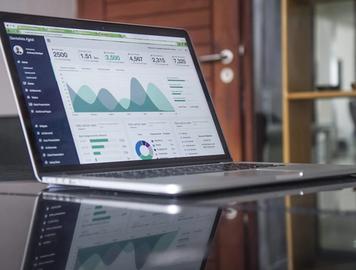
Elevating Business Efficiency: An In-depth Guide on Financial Reporting Automation
The demands on finance teams have evolved. Stakeholders anticipate faster closes, more transparent narratives, and near real-time visibility—without increasing staff. Concurrently, finance is being asked to perform more strategic work: scenario planning, margin analysis, and performance management. Financial reporting automation is a practical solution to meet these expectations by standardizing data flows, reducing manual effort, and enhancing accuracy.

A Control-First Playbook for Finance Leaders: How to Automate Accounting Processes Efficiently
Automation is more than a luxury in finance; it is a capacity strategy. As transaction volumes increase, regulations become more stringent, and stakeholders demand real-time visibility, manual accounting becomes a bottleneck and a control risk. The objective is not to eliminate judgment, but to standardize repeatable work so the team can concentrate on analysis, risk management, and decision support.
Maximizing Efficiency: The Role of Financial Reconciliation Software in Modern Accounting
The Importance of Reconciliation


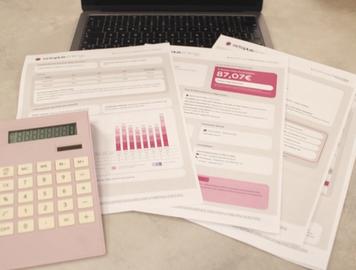
Appreciating the Role of Account Synchronization in Contemporary Accounting
Today's finance organizations operate in a world of segmented systems, distributed teams, and high expectations for real-time visibility. CFOs are expected to explain performance promptly, defend numbers confidently, and guide decisions with data that is both immediate and reliable. In this setting, account synchronization is a fundamental capability, not a back-office detail—it is the connective tissue that ensures ledgers, subledgers, bank data, and operational systems remain aligned.

The Crucial Role of Account Syncing in Contemporary Accounting Practices
Modern finance teams are anticipated to provide real-time visibility, audit-ready reporting, and sharper decision support—without expanding the team. This expectation clashes with a reality many CFOs are familiar with: vital data still resides in disconnected locations, from bank and card feeds to billing, payroll, and expense systems. Account Syncing bridges this gap by maintaining balances, transactions, and reference data synchronized across systems so that the ledger reflects what truly happened, and when it occurred.
Your Next Close Is Already Counting Down
Every hour your team spends on manual reconciliations is an hour they're not doing higher-value work. Equility handles the matching, the checks, and the errors — so your close takes hours, not days.