Automation
Replacing manual accounting steps with automated ones.
Uncovering the Best Bank Reconciliation Software for Finance Teams
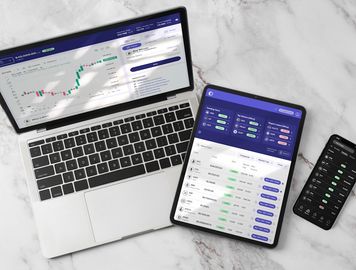
Finance leaders rarely find it difficult to define what bank reconciliation is; the more challenging part is executing it consistently, quickly, and with controls that withstand audit scrutiny. The best bank reconciliation software should diminish manual effort while enhancing evidence quality, exception management, and close predictability—without creating a “black box” that your team cannot decipher.

Optimizing Financial Operations with Check Reconciliation Software: A Comprehensive Guide for Professionals
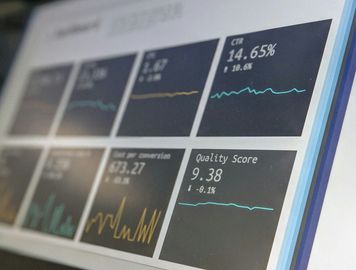
Finance departments continue to depend on checks for vendor payments, refunds, escrow activities, and certain disbursement workflows. However, the operational reality is often a fragmented process of bank portals, spreadsheets, and manual verification routines that make it difficult to determine what has truly cleared, what is stale, and what could be fraudulent. Check reconciliation software brings order to this by automating the matching of issued checks to bank activity, highlighting exceptions, and maintaining an audit trail that withstands scrutiny.

Mastering QuickBooks Sync Bank Account: An Essential Guide for Finance Professionals
Bank feeds can either be a finance team’s best accelerator or a quiet source of errors that accumulate over time. When configured thoughtfully, QuickBooks sync bank account workflows reduce manual data entry, speed up month-end close, and improve cash visibility for decision-makers. When configured casually, they can introduce duplicated transactions, misclassifications, and timing gaps that weaken reporting integrity.

Mastering Automated Bank Reconciliation in Excel: A Comprehensive Guide for Financial Leaders
Bank reconciliation is more than just matching lines. It is a control activity that safeguards cash, confirms revenue and disbursement completeness, and prevents minor discrepancies from becoming significant errors. However, many finance teams still rely on manual tick-and-tie processes that can be slow, difficult to review, and fragile when transaction volumes increase or banking formats change. This usually results in longer closes, increased operational risk, and too much time spent validating what happened instead of analyzing why.

Harnessing the Potential of Plaid and Stripe Integration for Streamlined Financial Operations
Finance leaders rarely grapple with a dearth of data—more often, the challenge lies in latency, fragmentation, and manual effort. When bank activity, payouts, refunds, and customer payment events are scattered, teams squander hours on spreadsheet stitching, delayed cash visibility, and reactive exception handling. A meticulously executed Plaid and Stripe integration addresses these challenges by linking bank account verification and transaction data with payment flows and downstream accounting processes.

Maximizing Efficiency: An In-Depth Guide to Integrating Zapier QuickBooks
Modern finance teams are expected to close faster, forecast better, and enforce stronger controls—often without additional headcount. Yet many organizations still rely on spreadsheets, inbox triage, and copy-paste handoffs between operational tools and the general ledger. The result is predictable: delayed month-end close, inconsistent coding, and elevated risk from manual entry.

Mastering How to Automate Bookkeeping: A Comprehensive Guide for Finance Professionals
Finance teams are under pressure to close faster, improve forecast accuracy, and strengthen controls—all while transaction volumes grow. In such an environment, the goal isn’t to “do less accounting,” but to standardize how data is captured, coded, reviewed, and reconciled so the team can spend more time analyzing results. When implemented correctly, automation reduces error rates, increases audit trails, and makes performance more measurable.

Embracing the Future: The Benefits of Cash Reconciliation Automation in Modern Accounting
Cash is the most scrutinized and time-sensitive balance on the balance sheet—and also one of the easiest places for errors, timing gaps, and control breakdowns to hide. For CFOs and controllers, the challenge is not simply “reconciling the bank,” but reconciling across multiple accounts, payment channels, entities, and cutoffs while still supporting a faster close. That’s why cash reconciliation automation has shifted from “nice to have” to a foundational capability for modern finance operations.
Your Next Close Is Already Counting Down
Every hour your team spends on manual reconciliations is an hour they're not doing higher-value work. Equility handles the matching, the checks, and the errors — so your close takes hours, not days.