CFO
What the CFO is accountable for, and what to delegate.


Evaluating the Pros and Cons of Outsourced Accounting Firms vs In-House Accounting
Finance leaders are being tasked with delivering more using fewer resources: shortening close timelines, improving forecasting accuracy, enhancing compliance, and still providing strategic decision support. In this context, many CFOs are reconsidering a fundamental operating model decision: should the accounting function be fully in-house, fully outsourced, or hybrid? The optimal answer depends on scale, complexity, risk tolerance, and the maturity of your processes and systems.

Assessing AP Automation Companies: A Comprehensive Guide for Financial Experts
Accounts payable is no longer a back-office function that can be managed by effort alone. With the growth in invoice volumes, diversification of payment methods, and rising audit expectations, manual AP becomes a bottleneck that increases cycle times, obscures cash visibility, and elevates fraud risk. Therefore, choosing the right automation partner is a finance transformation decision, not just a software purchase.



Mastering Automated Clearing House (ACH) Transactions in Modern Finance
ACH has evolved beyond a back-office utility—it is now a strategic payment rail influencing working capital, fraud exposure, customer experience, and operational scalability. For CFOs and finance leaders, understanding how ACH transactions move money, their timing, and potential failure points is crucial for establishing resilient payables and receivables.
Evaluating Free Bookkeeping Software for Small Businesses: A Comprehensive Guide for CFOs
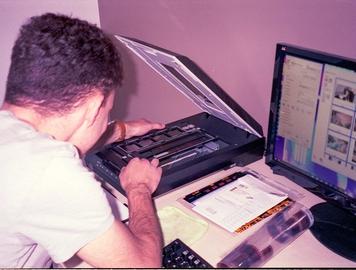
Free bookkeeping platforms may seem similar at first glance: a dashboard, a few categories, and basic reports. However, for CFOs and finance leaders, the real question is whether ‘free’ can support disciplined accounting—accurate coding, clean audit trails, reliable reconciliations, and repeatable month-end close—without incurring hidden costs in time, risk, or downstream rework.

Navigating Bookkeeping Software for Small Business: A CFO's Guide
Selecting bookkeeping software is not merely a back-office choice—it’s a decision that impacts the entire finance operating model. For CFOs and finance leaders, the right system can streamline close cycles, enhance the quality of decision-making reporting, and mitigate compliance risk. Conversely, an ill-suited system can result in manual workarounds, inconsistent coding, and fragile spreadsheets that buckle under growth.
Grasping the Crucial Role of Automated Clearing House Payment in Contemporary Accounting
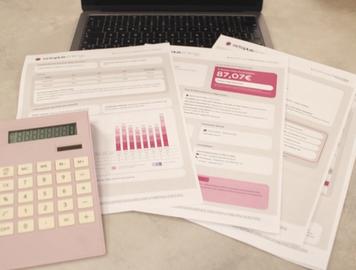
Accounting teams are increasingly expected to accelerate their pace without compromising accuracy, control, or compliance. Concurrently, payment volume is escalating, payment methods are diversifying, and stakeholders demand instantaneous visibility into cash. In such a scenario, electronic bank transfers, notably ACH, have emerged as the backbone of routine disbursements and collections, ranging from payroll and vendor payments to customer debits and subscription billing.
Your Next Close Is Already Counting Down
Every hour your team spends on manual reconciliations is an hour they're not doing higher-value work. Equility handles the matching, the checks, and the errors — so your close takes hours, not days.