Outsourced Accounting
Buying the function instead of staffing it: outsourced bookkeeping, accounting firms, and what to keep in house.

Exploring the Benefits and Cost Efficiency of Outsourced Accounting for Businesses
Finance leaders are under constant pressure to close faster, report with higher confidence, and provide decision-ready insights—often with lean teams and rising complexity. In that environment, outsourced accounting is frequently evaluated as a way to add scalable capacity and process discipline without overbuilding internal headcount.

Unlocking Efficiency and Control with Cloud Bookkeeping Services
Finance leaders are consistently tasked with closing faster, providing better insights, and scaling operations without proportionately increasing headcount. Simultaneously, stakeholders demand stronger controls, cleaner audit trails, and real-time visibility into cash, profitability, and working capital. These requirements have fueled the rapid adoption of cloud bookkeeping services, which integrate modern process design, standardized controls, and readily available financial data.

Understanding the Advantages and Disadvantages of an Outsourced CPA for Your Business
Finance leaders are under constant pressure to deliver faster closes, more reliable forecasts, and tighter compliance—often with lean teams and growing operational complexity. In that environment, an outsourced CPA can be an effective way to access specialized technical expertise and scalable capacity without committing to a full-time hire. The model can work particularly well for businesses that need senior-level accounting judgment, project-based support, or a backstop for internal teams during peak periods.

Assessing the Efficiency of Bookkeeping Outsourcing Companies in Financial Management Optimization
Finance leaders rarely find it difficult to locate providers; the real challenge lies in differentiating marketing claims from tangible operating efficiency. When you assess bookkeeping outsourcing companies with the same rigor you apply to internal teams—clear KPIs, control evidence, and repeatable workflows—you can significantly improve close speed, reporting reliability, and leadership confidence in the numbers. However, results may vary depending on the volume and maturity of controls.

Maximizing Financial Efficiency with Outsourced Bookkeeping Companies
Finance leaders are increasingly asked to do more with less: speed up month-end close, improve data quality, support audits, and produce decision-ready reporting—often without increasing staff. This challenge has made outsourced bookkeeping companies a strategic tool, not just a method for cutting costs. The best results are achieved when outsourcing is approached as a redesign of the operating model with defined controls, timelines, and accountability.


Evaluating the Pros and Cons of Outsourced Accounting and Bookkeeping for Small Businesses
Finance leaders are increasingly expected to deliver faster closes, cleaner data, and decision-grade reporting—often without the necessary headcount. In this context, outsourced accounting and bookkeeping has emerged as a viable operating model for many small businesses, particularly those navigating growth, compliance requirements, and cash discipline. The core question isn't whether outsourcing is inherently "good" or "bad," but whether the structure, controls, and service levels align with your company's complexity and risk profile.

Enhancing Your Finance Operations with Outsourced Accounts Payable
Finance leaders are under pressure to deliver faster closes, better cash visibility, and stronger controls—often with leaner teams. Accounts payable is frequently where these demands collide: invoice volumes grow, supplier expectations rise, and manual workflows create bottlenecks that ripple into forecasting, working capital, and audit readiness. Done well, outsourced accounts payable (AP) is not a cost-cutting tactic; it is an operating model decision that can raise the maturity of the entire finance function.
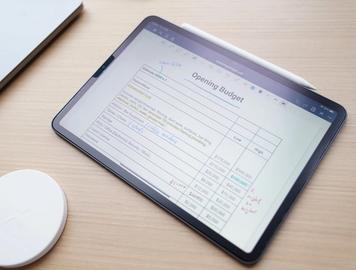
Navigating Outsourced Bookkeeping for Startups: A Comprehensive Guide
Startups are characterized by their speed and agility, but financial operations cannot afford to be improvised. Investors expect timely reporting, founders need reliable runway visibility, and CFOs must prevent small process gaps from turning into material misstatements. In this context, outsourced bookkeeping for startups often becomes an early operating decision—sometimes intentional, sometimes reactive after the first messy month-end.
Your Next Close Is Already Counting Down
Every hour your team spends on manual reconciliations is an hour they're not doing higher-value work. Equility handles the matching, the checks, and the errors — so your close takes hours, not days.