Internal Controls
Segregation of duties, review, sign-off and evidence.

Mastering Bank Reconciliation in Excel: A Comprehensive Guide for Finance Professionals
Bank reconciliation is one of the highest-leverage controls in a finance organization: it validates cash integrity, detects errors early, and provides a defensible audit trail. Yet many teams still treat it as a monthly scramble—exporting bank activity, manually matching items, and chasing explanations days before close. Done well, an Excel-based reconciliation becomes a repeatable operational process that reduces close risk while improving visibility into cash timing and working capital.

Exploring the Benefits and Costs of QuickBooks Outsourcing for Finance Professionals
Finance leaders are under steady pressure to close faster, report with greater precision, and keep costs variable as the business changes. Yet the workload inside most accounting teams is still dominated by routine tasks: transaction coding, reconciliations, vendor management, and periodic clean-up that compounds when process discipline slips. QuickBooks outsourcing has emerged as a pragmatic operating model for organizations that want a reliable accounting engine without permanently expanding headcount.

Elevating Financial Operations: The Impact of Transaction Management Systems for CFOs
In today's fast-paced business environment, CFOs are often tasked with doing more with less: shortening close cycles, increasing forecast accuracy, reducing fraud exposure, and ensuring compliance—all while transaction volumes continue to rise. In this context, transaction management systems have evolved from a 'nice-to-have' back-office upgrade to an operational necessity that directly impacts cash, risk, and decision-making quality. A well-chosen platform can transform disparate payments, approvals, and reconciliations into a governed, auditable workflow.

Boosting Productivity: How QuickBooks Automation Can Improve Close Speed, Controls, and AP Efficiency
Finance teams are increasingly expected to achieve more with the same resources—accelerated closes, tighter cash visibility, and stronger compliance—while transaction volume continues to rise. In such a scenario, automation ceases to be a mere 'nice-to-have' and becomes a structural advantage that mitigates operational risk and liberates high-value talent for analysis, partnering, and decision support.

Mastering the Art of Reconciling GL Accounts: A Comprehensive Guide
For finance leaders, the concern isn't about routine transactions—it's about the unknown elements lurking in the ledger: outdated accruals, unreconciled clearing accounts, and 'temporary' balances that never reverse. To mitigate these uncertainties, the most reliable method is to reconcile GL accounts using a repeatable process, clear ownership, and robust evidence that withstands scrutiny.

Leveraging the QuickBooks Online Help Center: A Comprehensive Guide for Finance Professionals
Finance leaders rarely struggle due to a lack of tools; they struggle because answers are scattered, tribal knowledge is inconsistent, and urgent month-end issues collide with limited time. In that environment, the QuickBooks Online Help Center can be more than a troubleshooting library—it can become your team’s operational playbook for consistent processing, clean close, and lower support dependency.

Harnessing Connex for QuickBooks for Streamlined Financial Management: A Comprehensive Guide for Finance Leaders
Modern finance teams are often challenged to close faster, deliver results with confidence, and maintain audit-ready controls, even as transaction volumes escalate. In such a scenario, the cost of manual work multiplies: duplicated entries, inconsistent mappings, and delayed reconciliations create downstream reporting risks that surface when leaders need answers promptly.

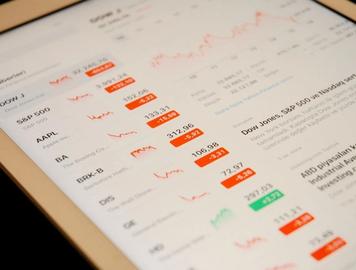
Exploring the Future: How AI Software for Accounting Is Changing the Finance Industry
Finance leaders are witnessing a fundamental shift: accounting is transitioning from periodic, manual workflows to continuous, data-driven operations. The catalyst is AI software for accounting, which merges machine learning, natural language processing, and workflow automation to reduce effort in routine processing while enhancing the speed and quality of decision support. For CFOs, controllers, and accounting leaders, the real question is not whether AI will be used, but where it should be deployed first—and how to govern it.
Your Next Close Is Already Counting Down
Every hour your team spends on manual reconciliations is an hour they're not doing higher-value work. Equility handles the matching, the checks, and the errors — so your close takes hours, not days.