Financial Efficiency
Doing the same close with less time and fewer people.

How to Automate QuickBooks Data Entry for More Efficient Accounting
Manual entry is one of the highest-friction activities in the accounting function: it’s slow, inconsistent, and prone to avoidable errors. For many organizations, the goal isn’t to eliminate human review—it’s to reduce repetitive keystrokes so finance can focus on exceptions, controls, and decision support. When you automate transaction coding in QuickBooks thoughtfully, you’re not just saving hours; you’re improving auditability and standardizing how transactions are coded.

Maximizing Efficiency with QuickBooks Automatic Journal Entries: Controls, Speed, and Accuracy
Finance leaders rarely lose sleep over the concept of a journal entry—what keeps them up is the compounding effect of small posting errors, delayed accruals, and inconsistent classifications that surface during close. The promise of QuickBooks automatic journal entries is not “automation for automation’s sake,” but a practical way to reduce manual touchpoints, improve timeliness, and create repeatable accounting outcomes that stand up to scrutiny.

Maximizing Efficiency: Implementing a CRM Integrated with QuickBooks in Your Financial Operations
Finance leaders are under constant pressure to close faster, forecast more accurately, and enforce stronger controls—without adding headcount. One of the most practical levers is connecting customer activity to financial outcomes so that quotes, invoices, cash receipts, and revenue reporting move as a single, governed workflow. In that context, a CRM integrated with QuickBooks becomes less of a “sales tool” and more of an operational backbone for quote-to-cash.


Maximizing QuickBooks Cloud for Efficient Accounting: An In-Depth Guide for Finance Professionals
In the realm of modern finance organizations, the speed of accounting is only valuable when it is accompanied by accuracy, auditability, and clear ownership. Cloud-based accounting systems like QuickBooks Cloud can foster these outcomes by centralizing data, enabling structured workflows, and reducing spreadsheet dependency across close, reporting, and cash processes. The most successful teams perceive implementation as an operating-model decision, not merely a software switch.

Optimizing Efficiency through Accounting Workflow Management Software: An In-Depth Guide
Finance organizations often face challenges not due to lack of effort, but because of work moving through inconsistent steps, unclear ownership, and disjointed tools. Activities such as month-end close, payables approvals, revenue processes, and audit readiness frequently depend on spreadsheets, inboxes, and tribal knowledge—systems that fail to scale as transaction volume, entities, and compliance demands increase. The outcome is predictable: late closes, rework, control gaps, and key-person risk.
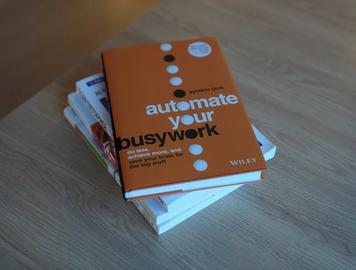
Maximizing Efficiency: An In-Depth Look at Automated Account Reconciliation Software
Finance leaders constantly face the challenge of closing accounts faster, reporting more accurately, and strengthening controls, all while managing lean teams and growing transaction volumes. Manual reconciliation processes, typically built on spreadsheets and email approvals, tend to falter as they scale: they introduce version-control issues, inconsistent documentation, and bottlenecks that delay the monthly close. The result is not only wasted time, but also increased operational risk and less confidence in the numbers.

Maximizing Efficiency: A Comprehensive Guide for QuickBooks Online Accountants
Finance leaders are under constant pressure to close faster, forecast better, and maintain airtight controls—all while supporting growth and responding to ad hoc requests. In such an environment, the role of the QuickBooks Online accountant transitions from merely “keeping the books” to designing a reliable operating system for the finance function. Efficiency is not just about speed; it encompasses repeatability, clarity of ownership, and the provision of timely, decision-grade information.

Your Next Close Is Already Counting Down
Every hour your team spends on manual reconciliations is an hour they're not doing higher-value work. Equility handles the matching, the checks, and the errors — so your close takes hours, not days.