Blogs & News
Check out our posts

Mastering Balance Sheet Reconciliation: A Comprehensive Guide for Finance Professionals
Balance sheet reconciliation is one of the most influential disciplines in controllership: it prevents misstatements, shortens close cycles, and instills confidence in management reporting. Yet many teams still treat reconciliations as a checklist exercise rather than a risk-based control that connects operational reality to the general ledger. When executed effectively, it becomes an early-warning system for process breakdowns, fraud risks, and integration issues across subledgers and bank activity.

Achieving Excellence in Balance Sheet Account Reconciliation for Finance Leaders
A disciplined close relies on trust in the balance sheet. However, even robust teams can fall into routine reconciliations when deadlines tighten, employee turnover occurs, or transaction volume surges. When executed correctly, balance sheet account reconciliation provides a trail of evidence that assets, liabilities, and equity are complete, accurate, and supported, month after month.
Mastering the Art: How to Reconcile Credit Cards in QuickBooks Online
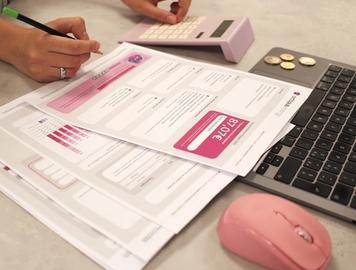
Reconciling credit cards is more than an accounting chore—it’s a frontline control for spend visibility, fraud detection, and month-end accuracy. For CFOs and finance teams, the goal is not simply to “get to zero,” but to build a repeatable process that reduces close time, tightens policy compliance, and improves confidence in operating expense reporting. Done well, reconciliation becomes a governance mechanism that prevents miscodings, missing transactions, and duplicate entries from cascading into inaccurate margin or budget analyses.

Leading the Charge: The Impact of a Cloud Accountant in Today's Finance Landscape
Today's finance landscape is being revolutionized by continuous operations, geographically dispersed teams, and stakeholders demanding answers in hours, not weeks. Within this dynamic, the cloud accountant has emerged as a beacon for speed and reliability, merging accounting precision with systems thinking, data discipline, and process design. This evolution is not merely about 'moving books online'; it involves re-engineering data flows, control mechanisms, and how leaders assimilate information.


Top 11 Benefits of Using Cloud Accounting Systems for Finance Professionals
Finance teams are being asked to deliver faster decisions, tighter controls, and clearer narratives—often with leaner resources. Traditional, on-premises accounting models can struggle to keep up with modern reporting cadences, distributed workforces, and increasing audit expectations. That's why many CFOs and controllers are moving core processes to cloud accounting systems to enhance speed, access, and resilience.


Navigating Bookkeeping Software for Small Business: A CFO's Guide
Selecting bookkeeping software is not merely a back-office choice—it’s a decision that impacts the entire finance operating model. For CFOs and finance leaders, the right system can streamline close cycles, enhance the quality of decision-making reporting, and mitigate compliance risk. Conversely, an ill-suited system can result in manual workarounds, inconsistent coding, and fragile spreadsheets that buckle under growth.

The Influence of Automated Clearing House Transfers on Business Finance
The automation of payments has evolved from being 'back-office plumbing' to a strategic tool for liquidity, cost control, and risk management. For finance leaders, the focus has shifted from whether to modernize payment rails to how to ensure these rails bolster cash forecasting, internal controls, vendor relationships, and compliance without introducing unnecessary exposure. Among the most commonly used rails in business payments are automated clearing house transfers, which facilitate batch, bank-to-bank electronic movement of funds for both payables and receivables.
Your Next Close Is Already Counting Down
Every hour your team spends on manual reconciliations is an hour they're not doing higher-value work. Equility handles the matching, the checks, and the errors — so your close takes hours, not days.